Quepos has a fishing calendar, and it is not complicated. December through April is billfish season, with sailfish in numbers and marlin for the ambitious. May through September is the dorado and yellowfin tuna run. Roosterfish bite on the inshore rocks every month of the year. Every charter leaves from Marina Pez Vela in Quepos, sailfish and marlin go back in the water by law, and the quietest, cheapest months are September and October. Here is the detail.
What bites when
| Species | Best months | Where | Notes |
|---|---|---|---|
| Sailfish | December to April, peak January to March | Offshore | The reason Quepos is famous. Release only. |
| Blue and black marlin | November to April | Offshore, full day | Biggest fish in this water. Release only. |
| Dorado (mahi mahi) | May to September | Offshore, current and debris lines | Fast, colorful, excellent on a plate. |
| Yellowfin tuna | May to September | Offshore, often under dolphin pods | Hard fight, best sashimi you will eat. |
| Wahoo | May to September | Offshore | Fastest thing that hits a lure here. |
| Roosterfish | Every month | Inshore, rocks and beaches | The inshore trophy. Usually released. |
| Snapper, snook, grouper | Every month | Inshore | Dinner fish. Kids catch these. |
The year in four stretches
December to April: billfish
The dry season and the peak. Sailfish arrive in real numbers, and a good day offshore means multiple releases. Blue and black marlin run from November through April and are targeted on full day trips. The sea is at its friendliest, the tournaments come to Marina Pez Vela, and every boat in the marina is booked. If you can only pick one stretch for billfish, January through March is it, and you should reserve weeks or months ahead.
May and June: the underrated pick
Green season starts, the dorado and tuna run begins, and the town empties out. The fishing stays good while the prices and the crowds drop. If you ask us when to come for value, this is the answer.
July to September: dorado, tuna, and whales
Mid green season. Mornings fish well ahead of the afternoon rain, dorado and yellowfin are the offshore story, and the southern humpback migration is in full swing, so whale sightings on the ride out are common. September is the quietest month of the year on the water and rates bottom out.
October and November: the turn
October is the wettest month and the easiest to book. November dries out, marlin numbers pick up, and the marina starts waking up for the season. A good way to beat the December rush by a few weeks.
Half day versus full day
A half day is four to five hours, leaves at first light, and is back in time for lunch. It is an inshore trip: roosterfish, snapper, and snook along the rocks and river mouths within sight of land. It is the right call for families, first timers, anyone who gets seasick, and any month where billfish are not the point. Every kid who has caught a snapper from a boat with the coast in view remembers it.
A full day is eight hours or more, and it exists because the sailfish and marlin grounds are a long run offshore. You need the hours to get there, fish, and get back. Lunch is usually included. This is the trip in December through April, and it is also the dorado and tuna trip in the green season. Some boats offer a three quarter day as a middle option; ask.
Inshore versus offshore
Inshore means the rocks, points, and beaches from Quepos south past the national park, fishing live bait or casting poppers for roosterfish. The sea is calmer, the runs are short, and there is always something biting. Offshore means blue water 20 to 40 miles out, trolling for billfish, dorado, and tuna. Bigger fish and a longer, rollier day. If your dates land outside the billfish peak, inshore is the guarantee and offshore is the adventure.
Marina Pez Vela
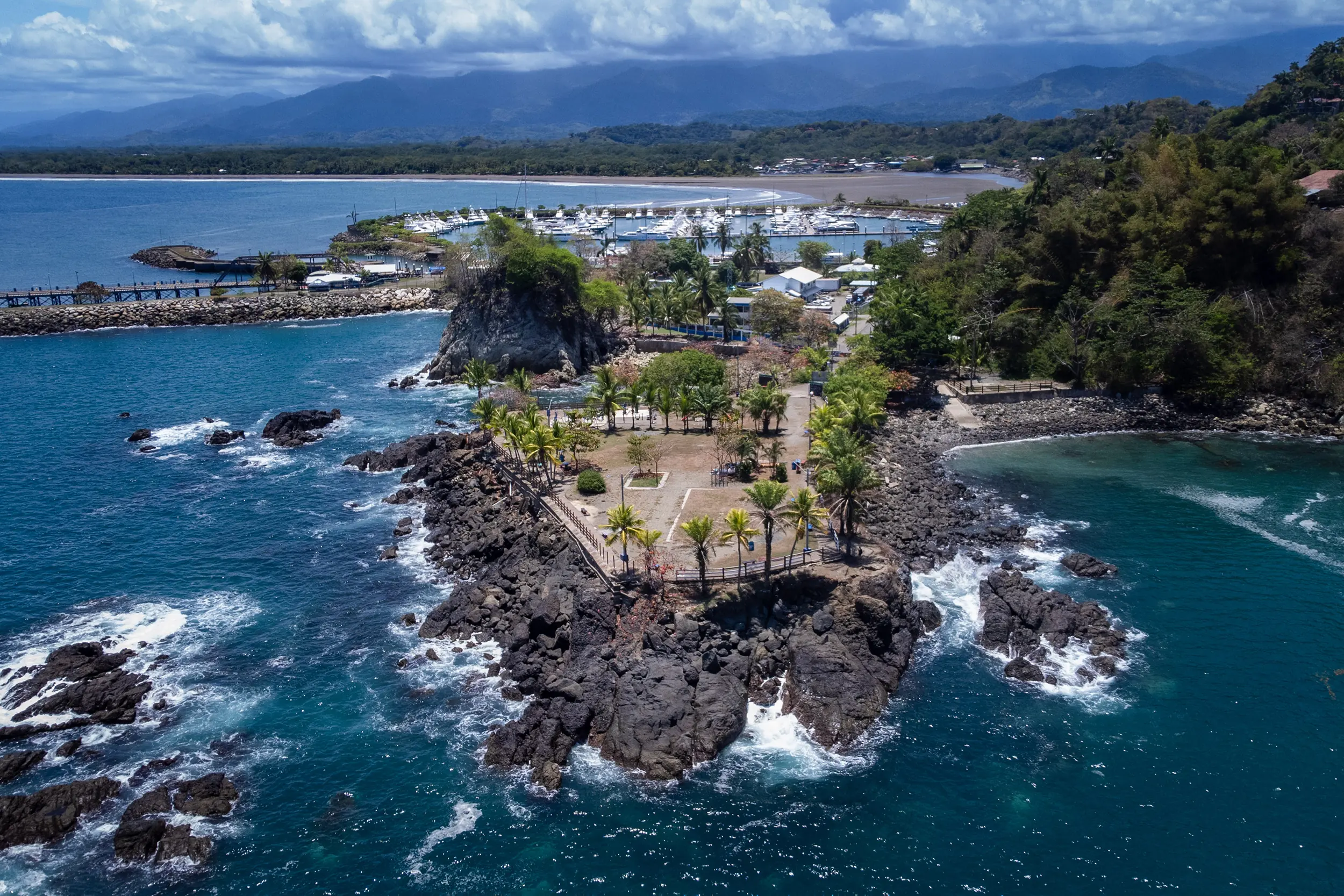
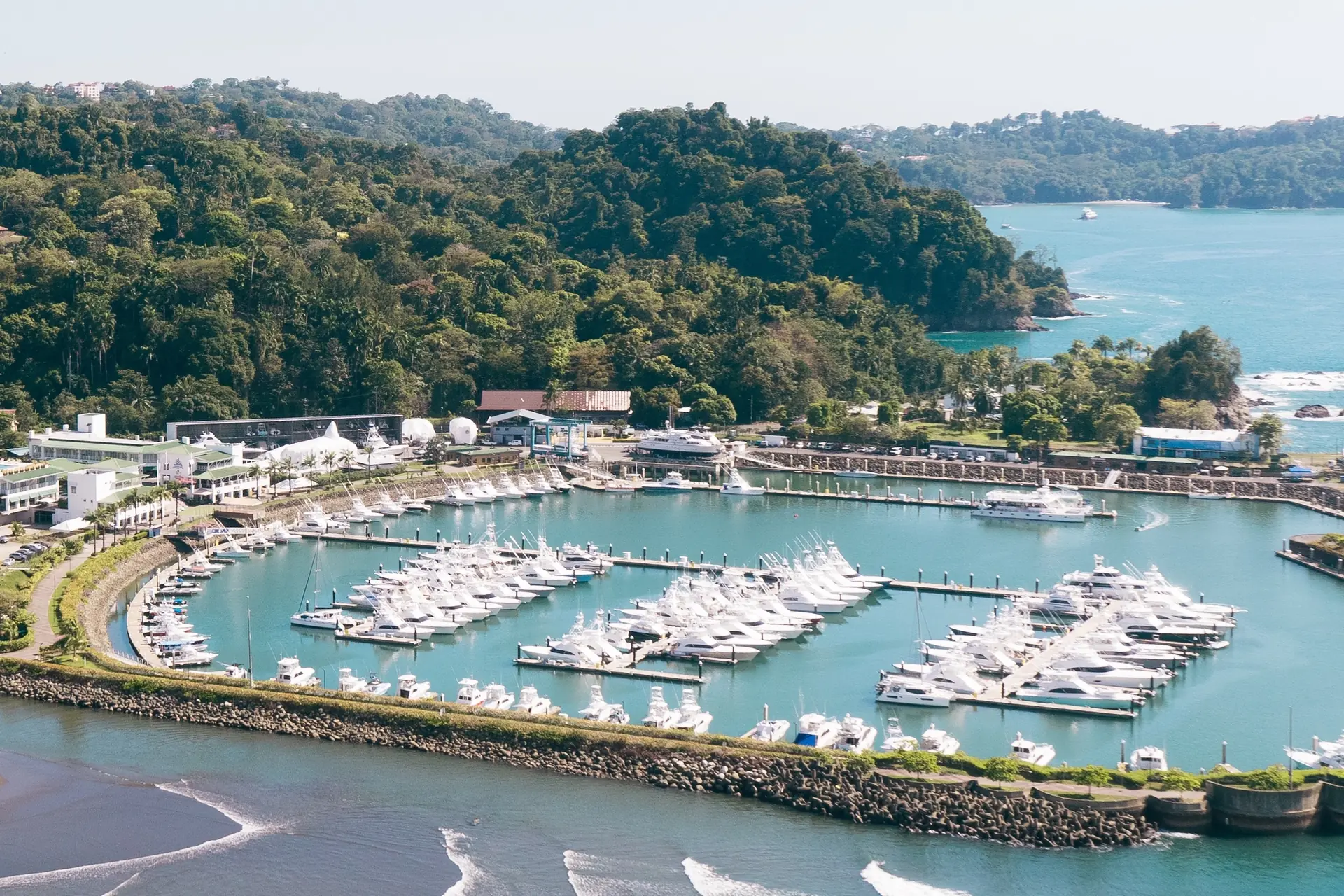
Every charter in Quepos leaves from Marina Pez Vela, a full service marina on the south side of town with slips, a fuel dock, restaurants, and a few shops. It is ten to fifteen minutes from the Manuel Antonio hill and most boats include pickup or can point you to a taxi. Arrive twenty minutes before departure, meet the mate at the dock, and you are out of the harbor as the sun comes up. In the evening the restaurants there will cook the dorado or tuna you kept.
What a charter includes
The captain and mate, all rods, reels, and tackle, live bait and lures, ice and a cooler for the catch, water, sodas, and usually beer. Full days generally include lunch, half days snacks. Ask three things before you pay: is the Costa Rican fishing license included, are marina or park fees extra, and what happens if the captain cancels for weather. Tipping the crew is customary and the mate earns it; ask us what is usual for the boat you book.
Catch and release for billfish
Sailfish and marlin are protected in Costa Rica. They are catch and release by law, circle hooks are required when fishing for them, and a good crew keeps the fish in the water beside the boat for the photo and the release. This is why the sailfish numbers here have held up. Dorado, tuna, and wahoo you can keep for the table; most people keep one or two and release the rest.
What to bring
Polarized sunglasses, a hat that ties on, reef safe sunscreen, and a light long sleeved shirt because the sun on the water is twice what it is on land. Motion sickness tablets taken before you board, not after. Non-marking shoes or sandals. A camera or a phone in a dry pouch. Cash for the tip. A copy of your passport in case the license needs it. Leave the bananas at home; the crew is superstitious and they mean it.
The fishing calendar tracks the weather calendar, so read the best time to visit Manuel Antonio alongside this. If you are bringing a group of anglers and their families, our guide to choosing a villa for a large group covers where to put everyone. More guides are on our guides page.