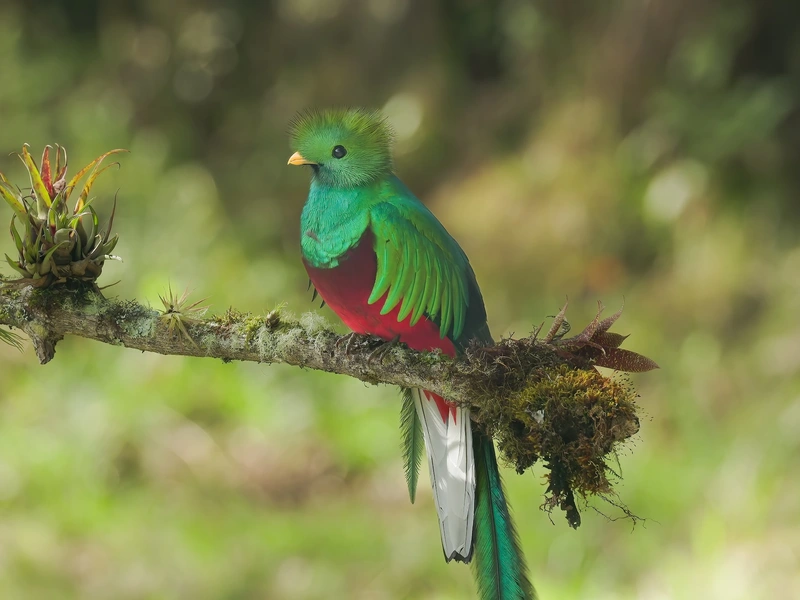
Monteverde sits high in the Tilarán mountains, where warm, moisture-laden air off the Caribbean meets the continental divide and condenses into a near-constant mist. That single fact of geography created one of the most biodiverse ecosystems on earth: mossy, epiphyte-draped trees, orchids growing on orchids, and a rate of endemic species found almost nowhere else in Costa Rica.
Unlike the beach towns along the Pacific, Monteverde is cool, damp, and quiet by design. Visitors come here for the forest itself: walking trails through primary cloud forest, canopy bridges strung above the tree line, and one of the best chances anywhere in the country to see a resplendent quetzal in the wild.
Monteverde Cloud Forest Biological Reserve. The original and best-known reserve in the area, protecting primary cloud forest along the continental divide. As of December 2025, visits run on pre-booked, one-way trail circuits rather than an open day pass, so we book your slot in advance.
Santa Elena Cloud Forest Reserve. A quieter, less-visited reserve a short drive from town, with self-guided trails that do not require advance reservations and a good chance at spotting the same wildlife with smaller crowds.
Hanging bridges. Suspended walkways at several private parks near Santa Elena put you at canopy level, at eye height with birds and epiphytes that are invisible from the forest floor.
Resplendent quetzal spotting. A guide who knows where the wild avocado trees are fruiting that week makes an enormous difference. Early morning walks, roughly 6 to 9 a.m., give the best odds.
Ziplining and canopy tours. Monteverde helped popularize the zipline canopy tour in Costa Rica, and several operators near Santa Elena still run long cable lines through the treetops.
Night walks. The cloud forest changes completely after dark. Guided night tours turn up sleeping birds, tarantulas, kinkajous, and the occasional olingo that never show themselves in daylight.
Monteverde is only about 130 kilometers from Juan Santamaría International Airport (SJO) near San José, close enough on a map that first-time visitors often underestimate it. Budget three and a half to four hours of driving. The road climbs steadily through the mountains, and the final stretch into Santa Elena is unpaved, which slows things down regardless of how good the rest of the route is. During the rainy season, from about May through November, we recommend a four-wheel-drive vehicle and an early start, since washouts and landslides can add delays and afternoon rain arrives predictably.
Monteverde does not follow the coast's dry season and green season pattern. At close to 1,440 meters in elevation, it stays misty, cool, and humid all year, with daytime highs generally between 20 and 25 degrees Celsius (68 to 77 Fahrenheit) and cooler nights. Expect cloud cover and light rain or drizzle in any month.
For quetzals specifically, the window is wider than most people expect: roughly December through August, while wild avocado trees fruit and the birds nest, with March and April considered the peak. May through October brings the heaviest rain, and November through February brings strong, steady wind along the continental divide, worth knowing if you are sensitive to it on exposed trails or bridges.
Monteverde is only about 130 kilometers (roughly 80 miles) from San José's Juan Santamaría International Airport, but plan on three and a half to four hours of driving. The road climbs and winds through the mountains, and the final stretch into Santa Elena is unpaved, so the trip takes much longer than the short distance suggests.
The reserve is open 7 a.m. to 4 p.m. daily. As of December 2025, entry is by pre-booked time slot on one of three one-way trail circuits rather than an open day pass, so we recommend booking your slot before you arrive.
Foreign adults pay 29 dollars per trail circuit, with reduced rates for children and Costa Rican residents. Fees and the circuit system changed in December 2025, so we always confirm current pricing before booking a client's visit.
Quetzals are most active and easiest to spot from about December through August, when wild avocado trees are fruiting and the birds are nesting, with March and April considered peak. Early morning, roughly 6 to 9 a.m., is the best window on any given day.
Yes. Monteverde sits at around 1,440 meters in elevation and stays misty, cool, and humid year-round, with daytime highs generally between 20 and 25 degrees Celsius (68 to 77 Fahrenheit). It does not follow the coast's sharp dry season and green season split. May through October is the rainiest stretch, and November through February brings steady wind along the continental divide.
Tell us your dates and what you love, we will match you with the right reserve, guide, and transport for the cloud forest.
Talk to a concierge