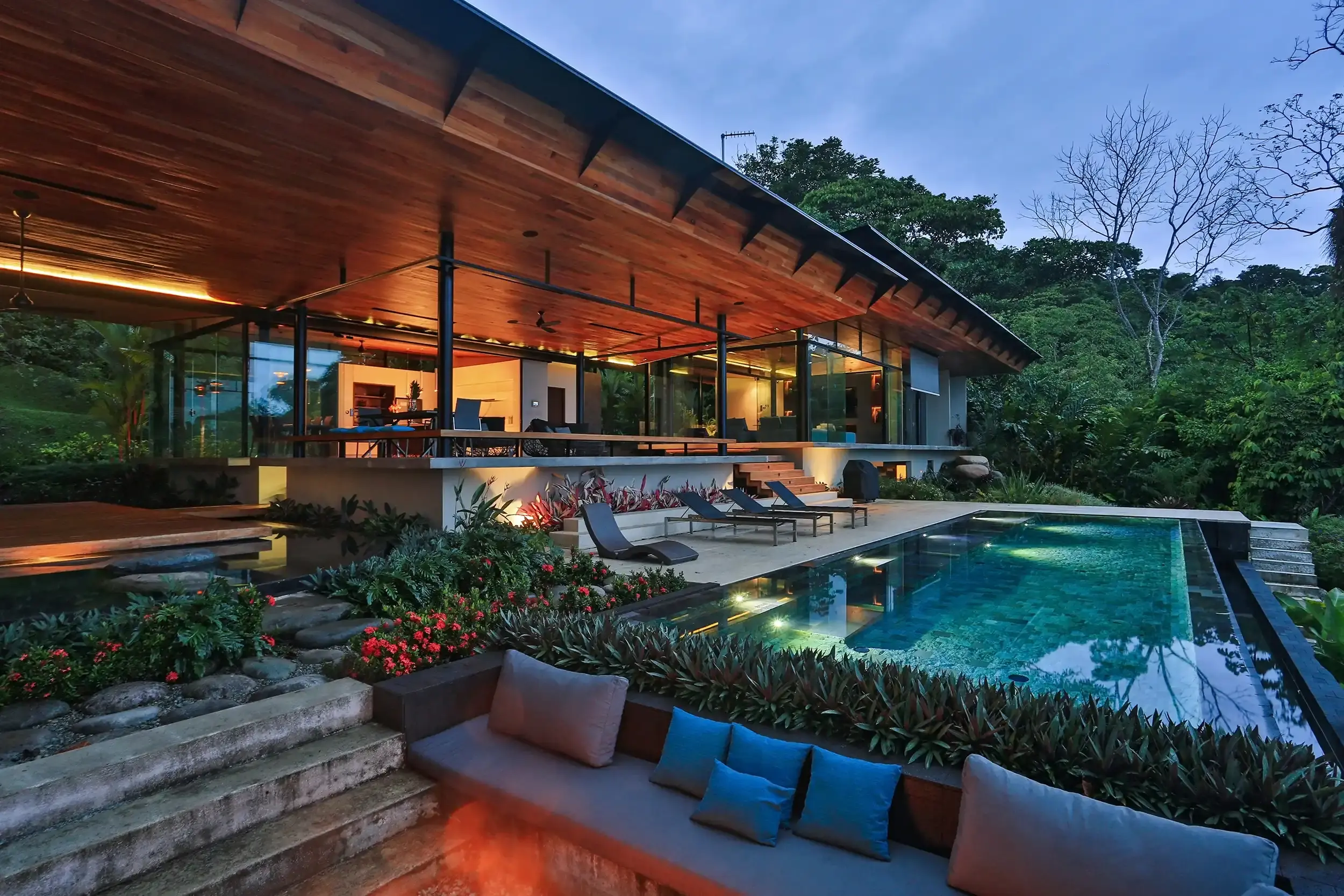
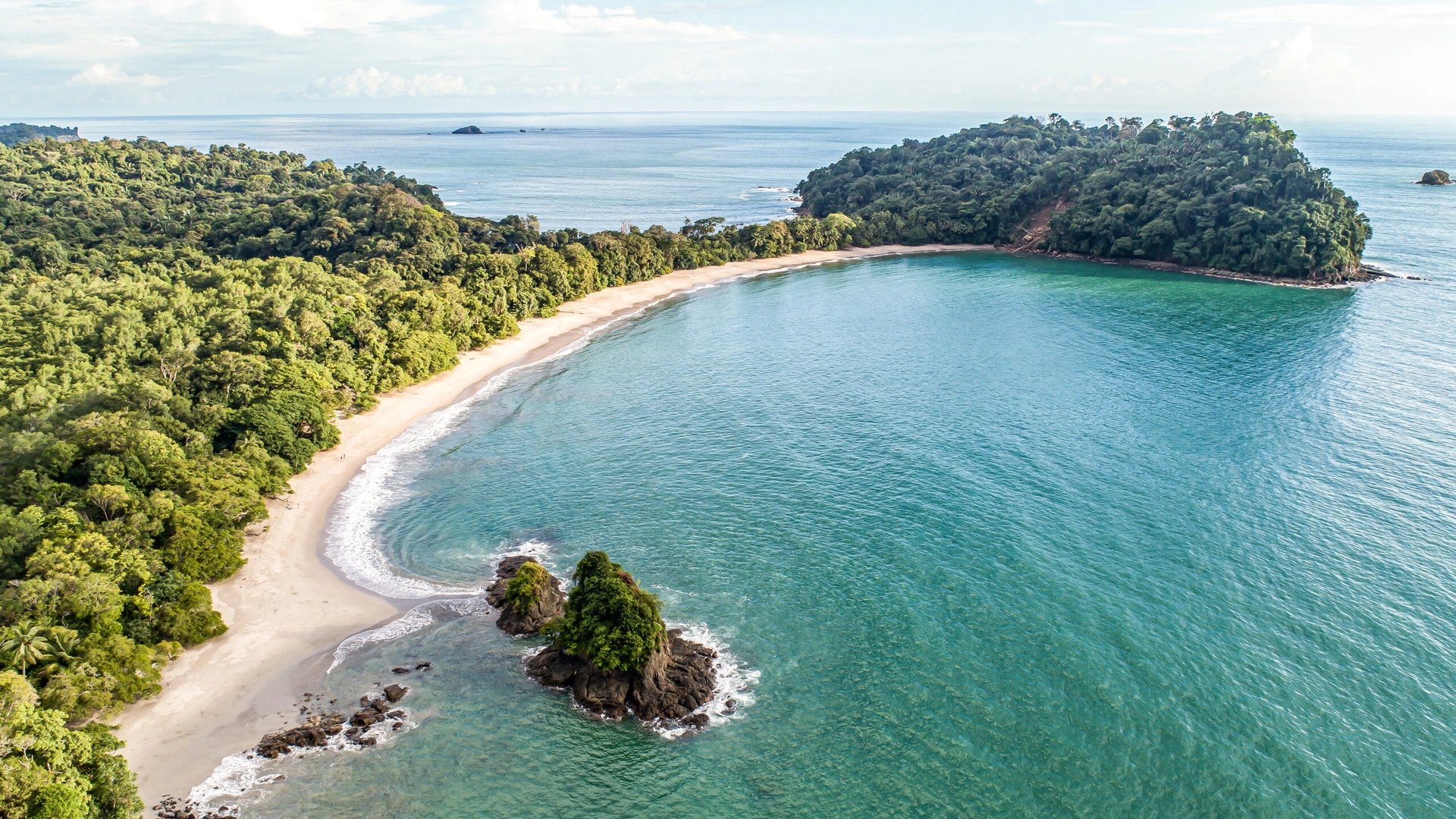
San José airport to Manuel Antonio is about three hours by road, all of it paved, most of it on two highways. You can do it in a private shuttle, a shared shuttle, a rental car, or a half hour flight to Quepos. Which one is right depends on when your plane lands, how many of you there are, and whether anyone is under four. Here is how we talk it through with people.
The route
From the airport in Alajuela you head west on Route 1, pick up Route 27 (the toll highway to the coast), come down out of the mountains to Caldera, then turn south on Route 34, the coastal highway. That road runs past the Tárcoles river, through Jacó and Parrita, and into Quepos. From Quepos it is one more short climb on Route 618 up the Manuel Antonio hill to the hotels and villas, with the national park at the bottom on the far side.
Call it 160 to 175 kilometers depending on where you are staying. Three hours is the honest number with no stops and normal traffic. Route 27 backs up on Friday afternoons heading to the coast and on Sunday afternoons heading back, and any holiday weekend adds time both ways. Bring small bills or a card for the tolls if you are driving yourself.
Four ways to do it
| Option | Good for | The catch |
|---|---|---|
| Private shuttle | Families, late arrivals, anyone who wants to stop | Costs more than shared, worth it from three people up |
| Shared shuttle | Couples and solo travelers on a budget | Fixed departures, other pickups, no stops |
| Rental car | People touring several regions | Tired driving, Manuel Antonio parking, insurance fine print |
| Flight to Quepos | Short trips, people who hate car time | Small planes, weight limits, weather in the green season |
Private shuttle
A driver meets you at arrivals with a sign, loads the bags, and takes you to your door. You leave when you land, not when a schedule says. You stop where you want. Car seats come with it if you ask. For two people it feels expensive next to the shared van; for a family of four or two couples splitting it, the math changes fast and this is what we book most.
Shared shuttle
Cheaper, and fine if your flight lands well before the departure time. You wait for the van, it collects other passengers, and it drops at hotels along the hill. Expect twelve passengers, a roof rack, and a couple of extra hours for the pickups and drops, and it drives past the crocodile bridge without stopping.
Rental car
If Manuel Antonio is one stop on a loop through Arenal or the south, a car makes sense. If it is your whole trip, think about it. You do not need a car here: the hill has taxis and a bus, tours pick up at your door, and parking at the park and the beach is a hassle. The rental counters also mean an hour of paperwork after a long flight, and the mandatory insurance costs more than the online quote suggested. A popular compromise is to take a shuttle down and rent a car in Quepos for a day or two.
The flight
Two airlines fly small planes from the San José airport to the Quepos airstrip: Sansa and Costa Rica Green Airways. Both leave from the airport you land at, so there is no cross-town transfer. It is under half an hour in the air and ten minutes from the strip to town, and on a clear morning you follow the coast the whole way down. Check both for times and fares, because the schedules and prices differ.
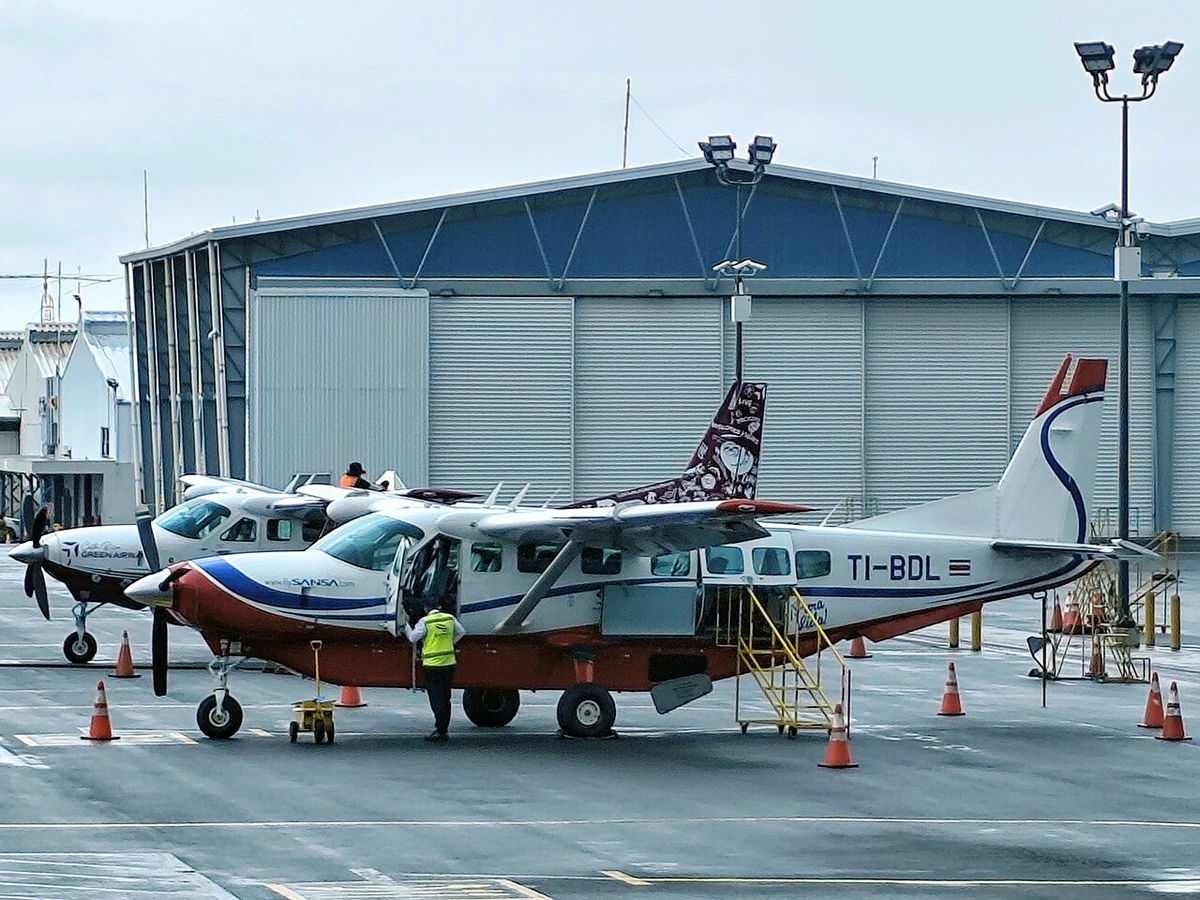
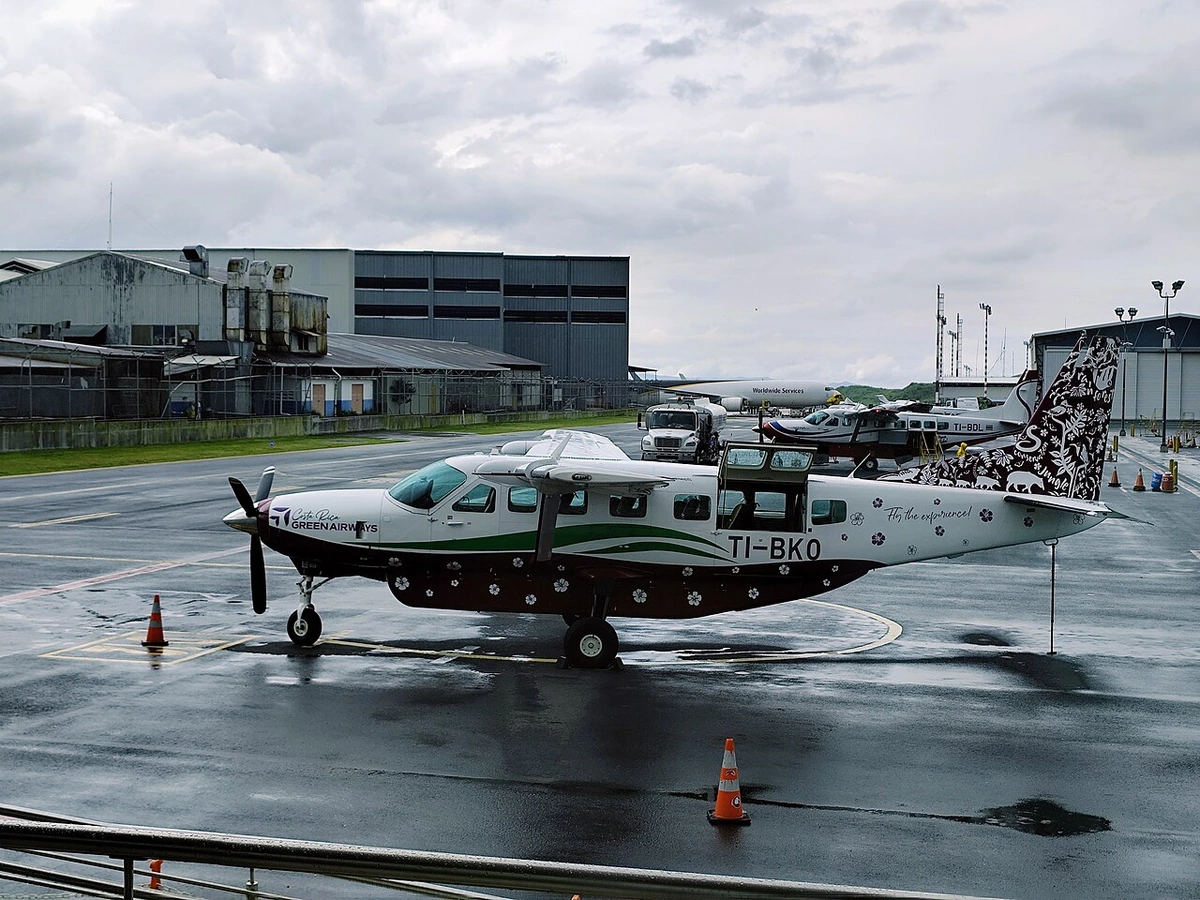
The trade is a small cabin, a luggage allowance well below what your international airline let you bring, and afternoon departures that can wait on rain between May and November. If you are coming off a long flight with big bags, check each airline's baggage rules before you book, and book the morning flight if you can.
Landing late at night
This is the conversation we have most. A flight that lands at 9 p.m. means you clear immigration and bags around 10, and you reach Manuel Antonio after 1 a.m. Route 34 has no streetlights, plenty of cyclists without lights, and the occasional animal. Doing that drive in a rental car, on your first night, after eight hours in the air, is the thing we talk people out of most.
Two good answers. One, sleep near the airport in Alajuela and leave at 7 the next morning, so you see the coast in daylight and arrive in time for lunch. Two, take a private shuttle at night. The driver does this road every week, you sleep in the back, and we tell the villa you are checking in late so someone is there with the keys.
Kids and car seats
Costa Rican law requires a car seat or booster for children under twelve who are shorter than 145 centimeters, and the police do check. Private shuttles bring seats when you ask, so tell us every child's age and weight when you book. Rental agencies rent seats too, and the quality varies, so some families bring their own. If you have a baby, a toddler, and a nine year old, that is three different seats, and it is much easier to have them waiting in the van than to sort it at a counter. Our guide to Manuel Antonio with kids covers the rest of the family logistics.
Stopping at the crocodile bridge
About an hour and a quarter from the airport, Route 34 crosses the Tárcoles river on a bridge you can walk. Look down and there are crocodiles on the mud banks, some of them longer than your car. It takes twenty minutes, it is free, and every kid remembers it. Keep your phone on a strap over the rail, keep an eye on the traffic because the walkway is narrow, and ignore anyone who wants to charge you for parking on the far side. Private shuttle drivers will stop; the shared van drives past.
Why groups usually take two vehicles
A van seats eight to ten people with luggage, and a big group rarely arrives on one flight. Two vehicles let the early flight go straight to the villa while the second waits for the late one. Two vehicles also mean one can stop for the crocodiles and a supermarket run while the other gets the grandparents out of the heat. If you are twelve or more, the bags alone push you into a second van or a small bus. We plan this when we book the house; our guide on choosing a villa for a large group covers the rest of that.
More arrival, park, and season guides are on our guides page.