At a zoo, the animals are behind glass and the signs tell your kids what they are looking at. In Manuel Antonio, a capuchin drops out of a tree onto the sand ten feet away, a sloth turns its head in a guide's scope, and a troop of howler monkeys wakes the whole house before sunrise. Nobody put them there. Your kids find them. That is the difference, and they feel it right away.
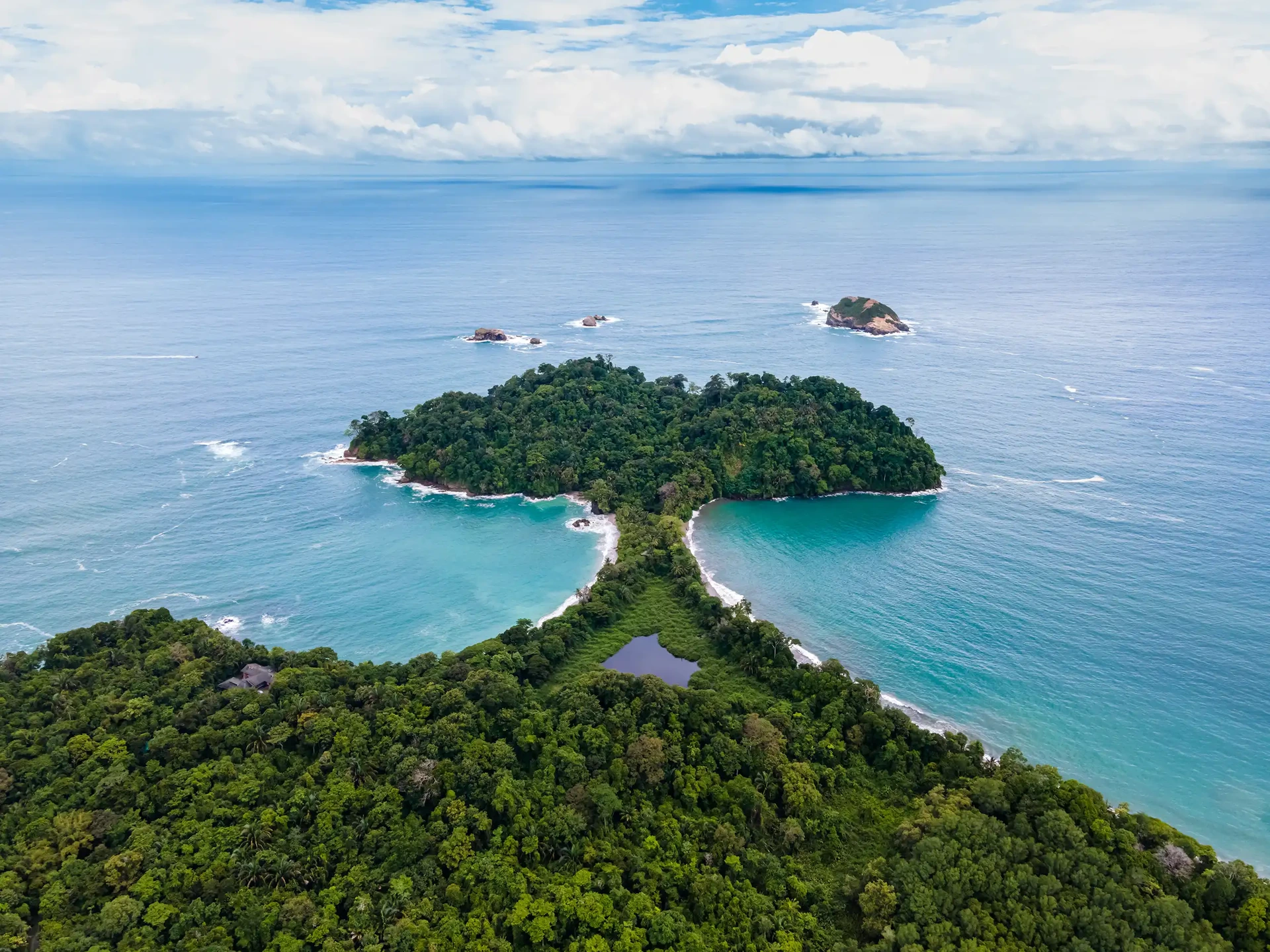
This is a small place where the rainforest runs straight into the ocean, and the wildlife does not stay inside the park fence. It crosses the road on power lines, walks through villa gardens, and sits in the trees over the beach. Plan around a few simple things, which beach you swim at, how early you start, and when everyone naps, and it works as well for a three-year-old as it does for a twelve-year-old.
What your kids will actually see
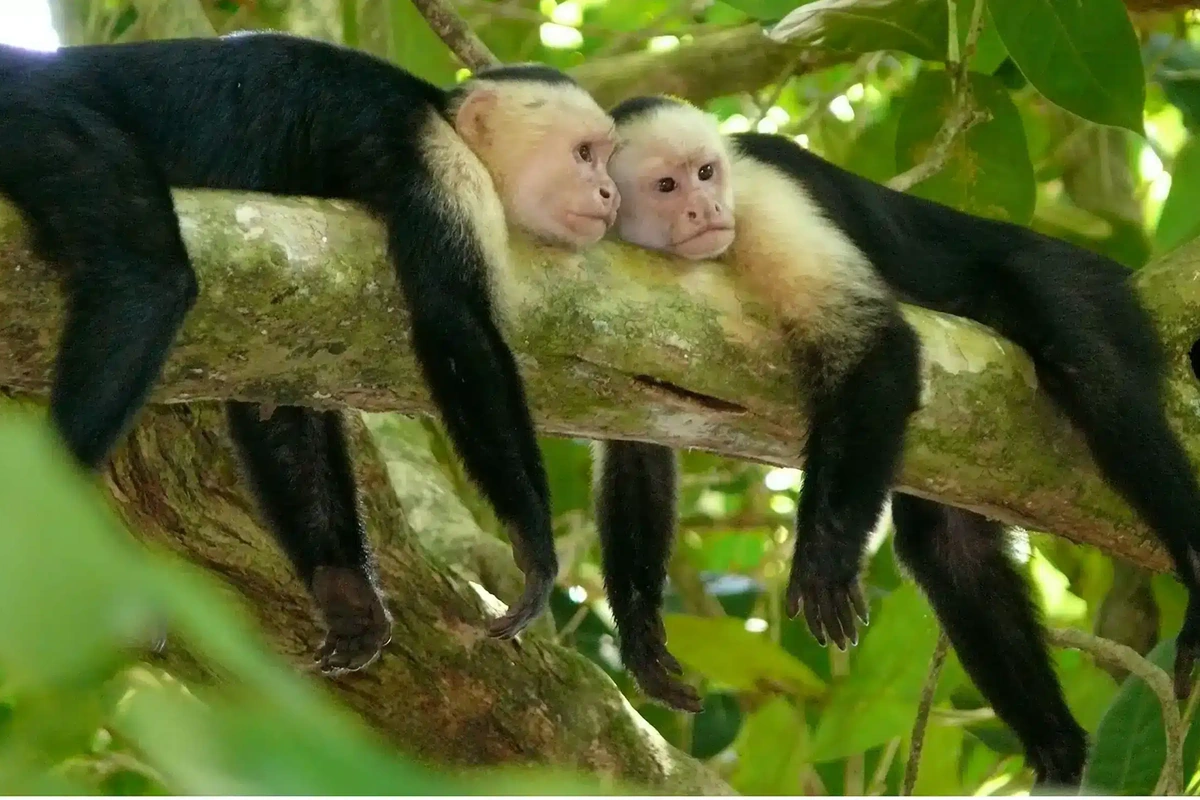
Three kinds of monkey live here. White-faced capuchins are the bold ones, the monkeys that hang around the park beach and watch your bag. Howlers are big, black, and slow, and you will hear them long before you see them: a roar at dawn that sounds like something out of a movie and turns out to come from an animal the size of a small dog. Squirrel monkeys are the little orange ones, and they move through hotel and villa gardens in the late afternoon, often on the same route every day. Ask your host what time they come through and have the kids on the terrace ten minutes early.
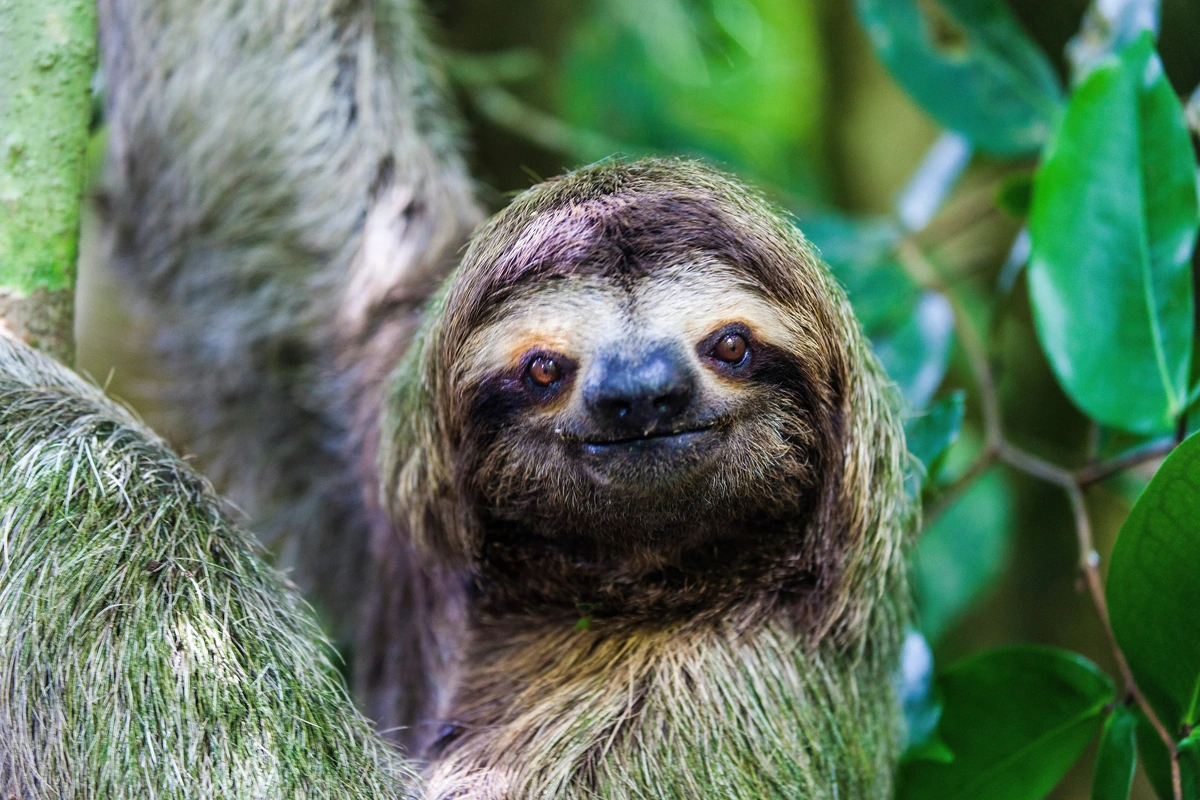
The park has both two and three toed sloths, and more than 300 kinds of birds live in the area. Toucans and scarlet macaws show up along the coast road without anyone going looking. Iguanas are everywhere, and children find them thrilling for about two days, then start pointing out the big ones like locals.
Sloths are the exception. They do not wait on your balcony. You see them with a guide, in the morning, in the park. Everything else turns up on its own schedule, and that is what makes a sighting feel like a discovery instead of an exhibit.
The national park, the kid version
Go at opening. It is cooler, the animals are moving, and you are finished before the sun gets serious. The Perezoso boardwalk from the entrance is flat and shaded and takes a stroller or a carrier, which is rare in a Costa Rican park. It ends near Playa Manuel Antonio, so the reward for the walk is a swim.
Book a guide. It is the best money you will spend here. A good park guide has walked these trails thousands of times and spots what you would walk straight past: a sloth curled into a ball high in a tree, a snake coiled on a branch at eye level, a column of leaf-cutter ants carrying pieces of leaf bigger than they are across the path. Then they explain what the kids are looking at. Why the sloth barely moves and only climbs down about once a week. How the capuchins figured out that backpacks hold food. What the howlers are shouting about at dawn (it is a message to the next troop over: this tree is taken). Kids who would walk past a sign at a zoo will fire questions at a guide for two hours straight.
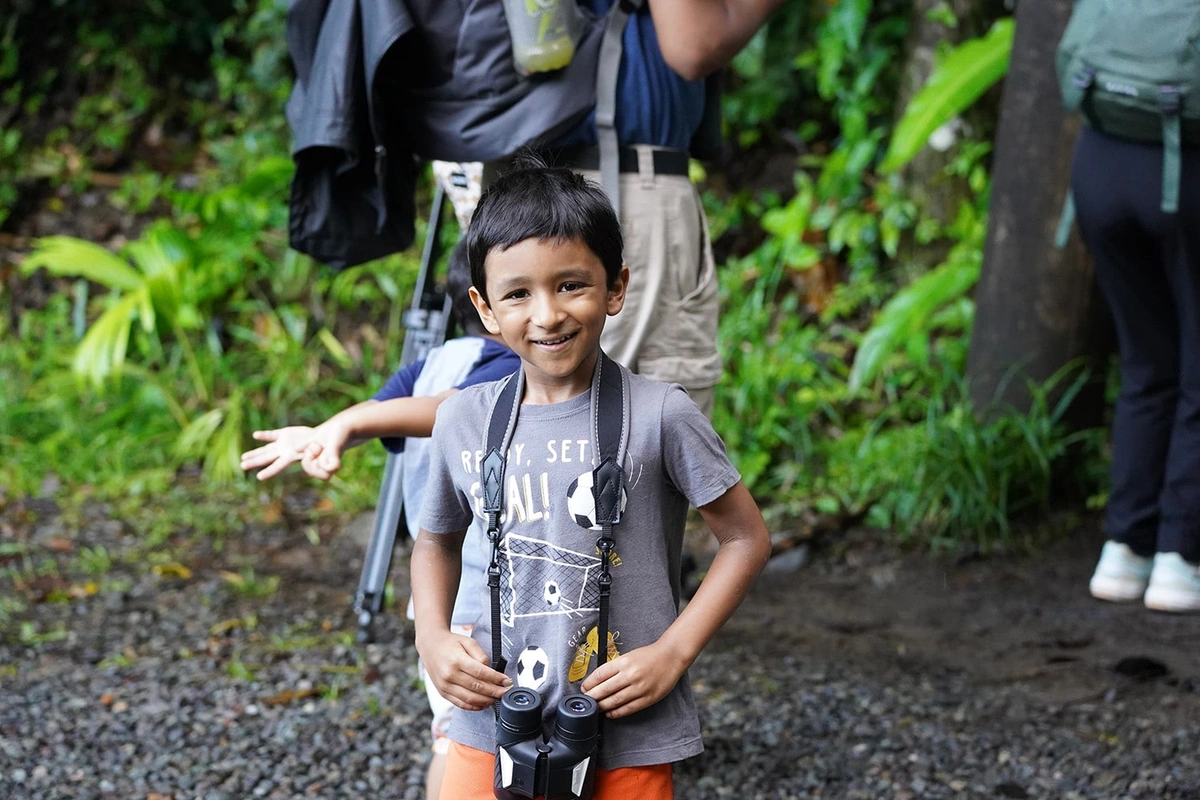
Guides also carry a spotting scope on a tripod, and they will line your phone up on the eyepiece and take the picture for you. Every family goes home with close-ups no phone could get on its own, a sloth's face or a toucan's bill filling the frame, and in a group everyone gets their turn at the scope. The guided walk runs about two hours and works for ages four and up, and the Perezoso boardwalk is wide and flat enough for a stroller, so the youngest can ride while the older ones take turns looking. With little ones who will not last two hours, go on your own, keep to the boardwalk and the beach, and leave when someone melts.
Two rules matter with kids. Outside food is not allowed and bags are checked, so leave the wrapped snacks at the house; there is a cafeteria inside. And the capuchins at the beach will open a zipper and take a sandwich out of a child's hand. Enjoy them from a few steps back, and never feed them. Tickets are online only and the park is closed on Tuesdays. The full rundown is in our national park guide.
The beaches: calm ones and the one with rips
Playa Biesanz is the one we send families to first. It is a small cove on the Quepos side of the hill, protected by headlands on both sides, so the water stays flat when the open beaches are pounding. There is shade, kayaks and paddleboards for rent, and a short steep path down from the road that is fine in sandals but not with a stroller. It fills up by late morning, so go early or after 3 p.m.
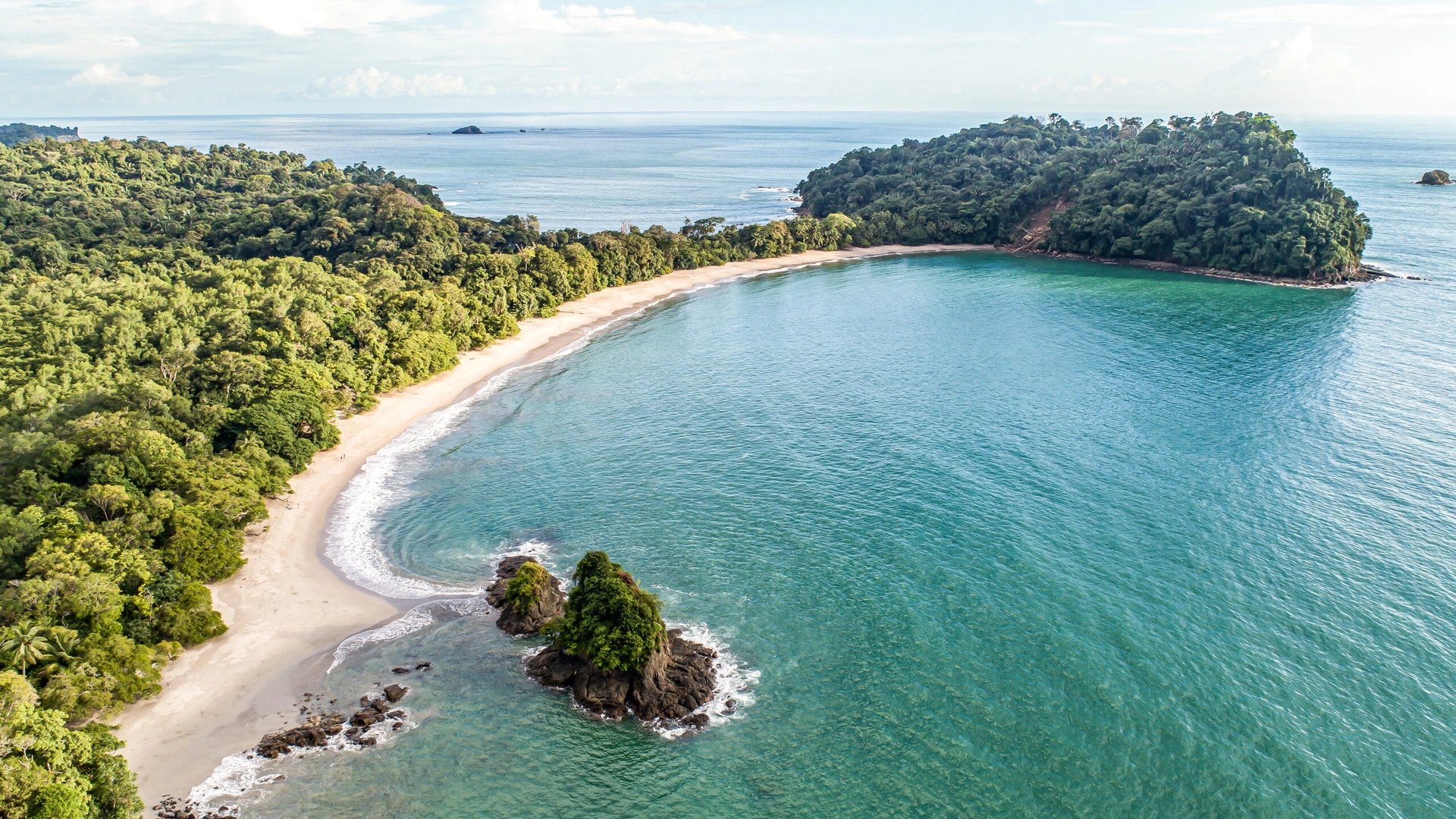
Inside the national park, Playa Manuel Antonio sits in a sheltered bay and is the calmest sand in the area. Playa Espadilla Sur next to it is wider and emptier, with some waves in certain months, and fine for splashing with an adult close by.
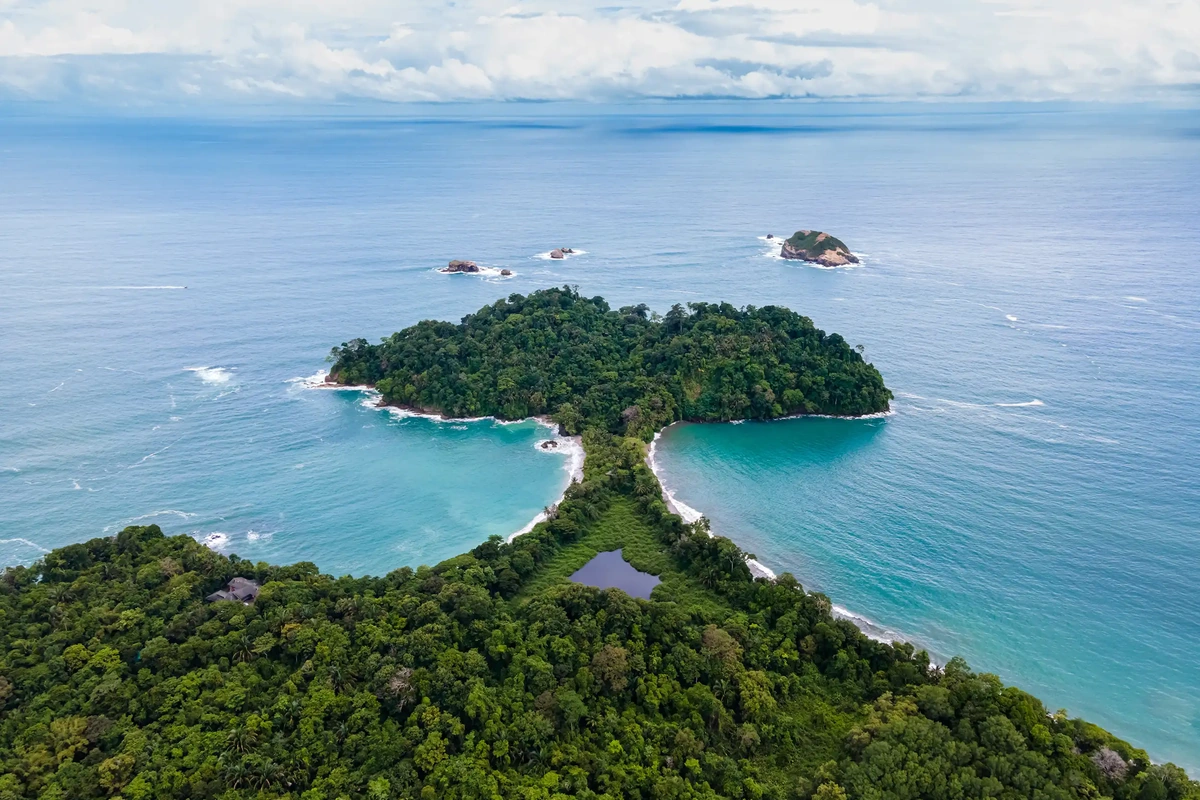
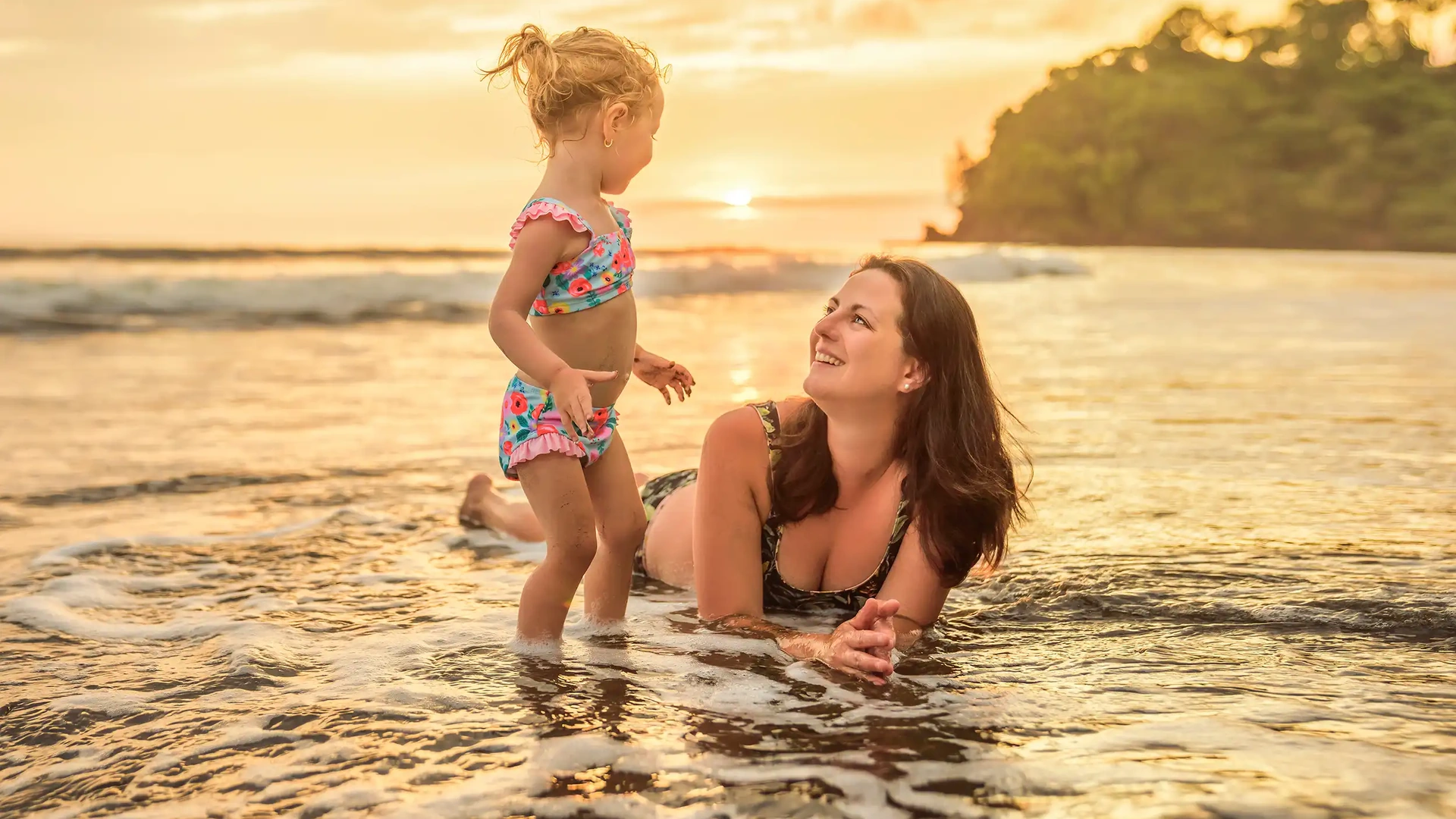
Playa Espadilla Norte, the long public beach at the bottom of the hill, is where people get into trouble. It has the strongest rip currents on this stretch, and the surf is biggest between May and November. Use it for sandcastles and sunsets with a child in arm's reach, not for swimming out. If anyone is ever pulled out, the rule is the same everywhere: do not fight it, float, and swim sideways along the beach until you are out of the current.
The mangrove boat
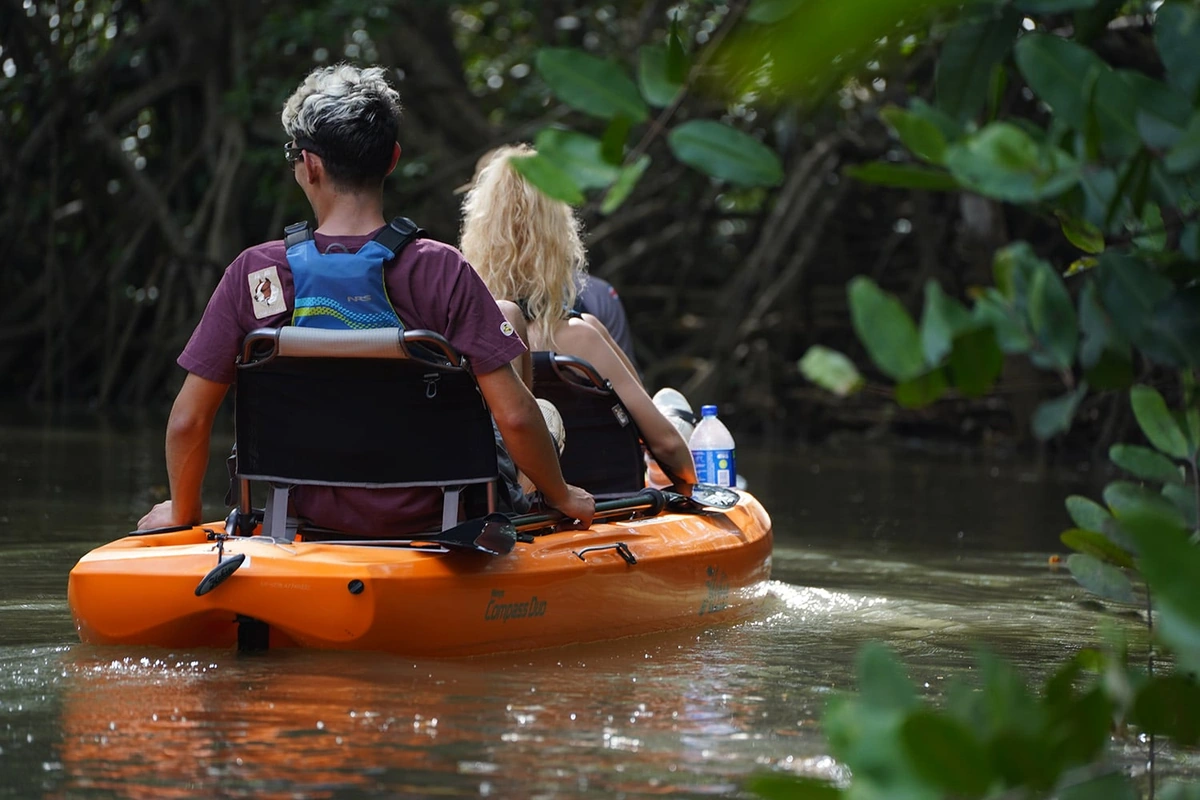
The Damas Island estuary tour is the outing that works for every age at once. A covered boat with bench seats goes slowly through mangrove channels ten minutes north of Quepos, on flat water, with a guide pointing out capuchins that come right down to the boat, herons, kingfishers, crabs on the roots, and now and then a crocodile at a comfortable distance. The boat has a roof, nobody has to walk anywhere, and toddlers usually fall asleep on the bench on the way back. Departure follows the tide, so the start time changes day to day; the whole thing is three to four hours with pickup. For kids who want to paddle, the same estuary has a kayak version.
When they are ready for a little adventure
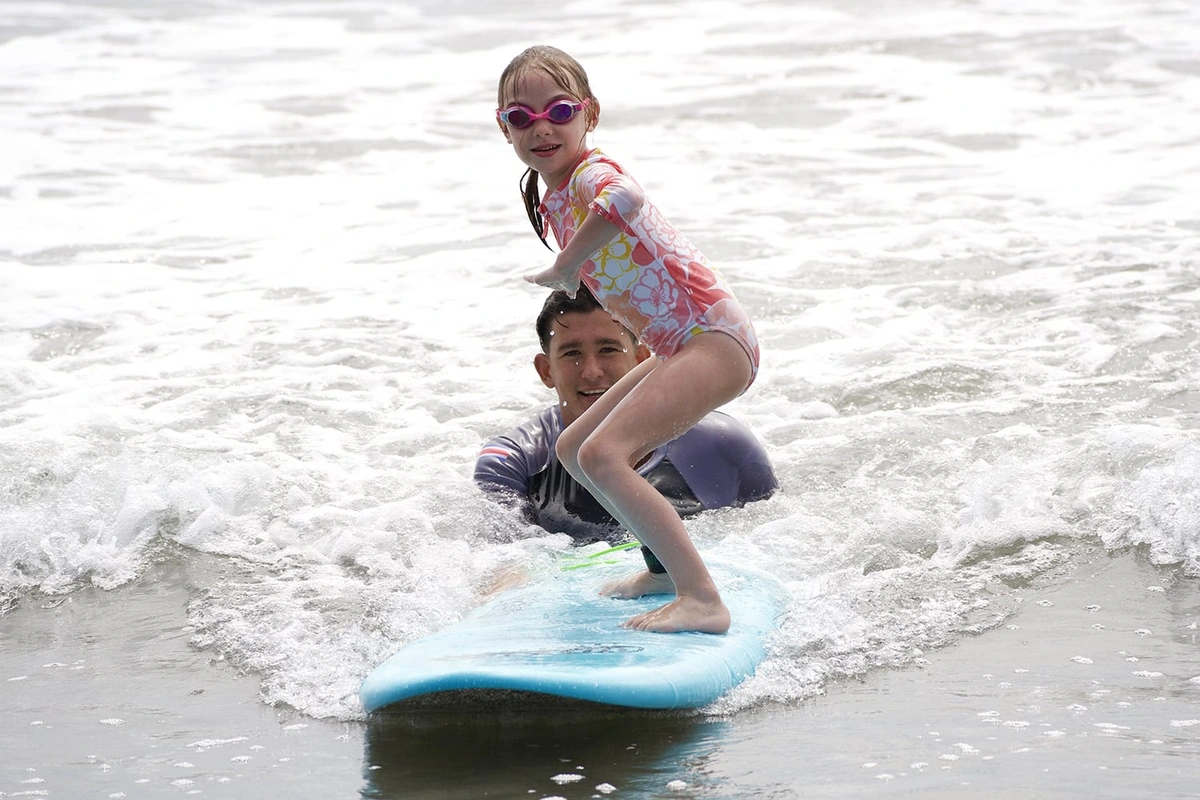
Older kids want to do something they can brag about at school, and Manuel Antonio has plenty. On the zip line canopy tour, children can ride from age six, with a Tarzan swing partway through for the brave ones. The jungle horseback ride ends with a swim at a waterfall; children riding their own horse must be over seven. Surf lessons work for younger kids too, because the instructors stay in the water and steady the board through the first rides. The first time a kid stands up on a wave, the whole beach hears about it.
The rhythm of a day: heat and rain
It is hot and humid here all year. The sun is comfortable until about 10 a.m., hard from 11 to 2, and pleasant again after 3. From May through November it usually rains in the afternoon, often a heavy hour around 3 or 4, then clears for the evening. December through April is dry, with hardly any rain at all.
So the pattern that works is simple. Up at 6 with the howlers, out the door by 7, one activity, early lunch, then the pool and a nap while the heat peaks, and a beach walk or the squirrel monkeys around 4. Dinner at 6. Kids settle into it in a day, because it matches when they are awake anyway.
Villas with pools versus hotels
For one family with children under ten, a villa usually wins. You get a kitchen for a 5:30 dinner, a room with a door for naps, a washing machine for the muddy clothes, and the pool a few steps from the sofa. Two families sharing a house also split the bill, and the grown-ups can have a drink after bedtime without leaving anyone alone. Hotels win on breakfast made by someone else, staff at the desk, and no cooking, and a few have kids' pools.
Ask three questions before you book any house here. Is the pool fenced? Most are not, so plan a watcher. How many stairs from the parking to the bedrooms? This is a hill, and the view comes with steps. And how far is the calm beach? A house above Biesanz is a different trip from one at the top of the hill.
Car seats and boosters
Costa Rica requires a car seat or booster for children under twelve who are shorter than 145 centimeters, and the traffic police enforce it. Private airport transfers and tour vans bring seats when you ask, so send every child's age and weight when you book. Rental car seats exist but vary in quality. We cover the whole arrival day, including what to do if you land late, in getting from San José airport to Manuel Antonio.
A sample day
| Time | What |
|---|---|
| 6:00 | Howler monkeys wake everyone. Fruit and coffee on the terrace. |
| 7:00 | First entry at the national park with a guide. Boardwalk, scope, sloth. |
| 9:00 | Swim at Playa Manuel Antonio inside the park. |
| 11:00 | Back at the villa. Early lunch, pool, naps. |
| 15:30 | Rain passes. Playa Biesanz for an hour, or the squirrel monkeys in the garden. |
| 18:00 | Dinner. Everyone asleep by 8. |
Swap the park for the mangrove boat on day two, add the zip line or a surf lesson on day three, and your kids will go home talking about the sloth they found themselves, not one they read about on a sign. More family and season guides are on our guides page.