Manuel Antonio National Park sells every ticket online through the SINAC system, none at the gate, and it closes every Tuesday. Buy ahead, take the earliest entry you can, hire a guide if you care about seeing animals, and carry water in a reusable bottle because outside food is not allowed. That is most of it. The rest of this guide is the detail we send people on WhatsApp every week.
Tickets: online only, and they run out
There is no ticket booth. You buy through the SINAC portal at serviciosenlinea.sinac.go.cr, which means creating an account, confirming your email, then choosing a date and an arrival window. Each ticket is good for one entry on one day. If you leave in the morning, you do not get back in that afternoon.
The park has a daily visitor cap. In December through April, and in any holiday week, dates sell out well ahead, so buy the park ticket before you book anything else in town. In the green season a week or two of notice is usually enough, and there are days in September and October when it never fills.
Bring the passport or ID whose number you typed in when you bought the ticket. The ranger checks the name on the ticket against the person holding it. The barcode on your phone is fine, no need to print.
Foreign adults pay 16 US dollars plus tax, children two to twelve pay five dollars plus tax, and under twos are free. Those figures are set by SINAC and do change, so check the official park page before you travel.
Hours and the closed day that catches people
The park is open Wednesday through Monday and closed every Tuesday. That is the single most common planning mistake we see: a two night stay where the only full day is a Tuesday. Check it before you lock in hotel nights.
The gate opens at 7 a.m. The official page lists a 3 p.m. close, and in practice the rangers start closing the beaches around then and walk everyone toward the exit within the hour. Plan on your day inside ending by mid afternoon, and confirm the current hours on the SINAC page because they have shifted more than once.
Do you need a guide?
If you want to see animals, yes. A sloth is a brown lump at the top of a tree. A guide knows which tree, carries a spotting scope, and lets you take a phone photo through it that actually looks like a sloth. Without one, most people see monkeys at the beach and not much else.
There is an office for the official guide association inside the park, and independent certified guides work the entrance. Ask to see the carnet, the badge with photo, ICT certification, and ID number. A guided walk runs about two hours and ends at the beach, so you get both.
If you only want the sand and the water, skip the guide and walk in on your own. Plenty of people do it and have a good day.
The trails and the beaches inside
The main trail is the unpaved access road from the entrance to a fork at the cafeteria. Running beside it is Sendero El Perezoso, a flat wooden boardwalk with benches and signs every few meters. It is the highest chance of a sloth in the park and it works with a stroller or a wheelchair, which is rare in Costa Rica.
Past the cafeteria, Playa Manuel Antonio is the sheltered bay and the reason you brought a towel. The water is calm and clear, and the edges by the rocks are good for a mask. Playa Espadilla Sur is on the other side of the sandbar, wider and emptier, with some waves in certain seasons. Playa Gemelas is a small cove a bit further on that stays quiet when the main beach fills.
The longer walks
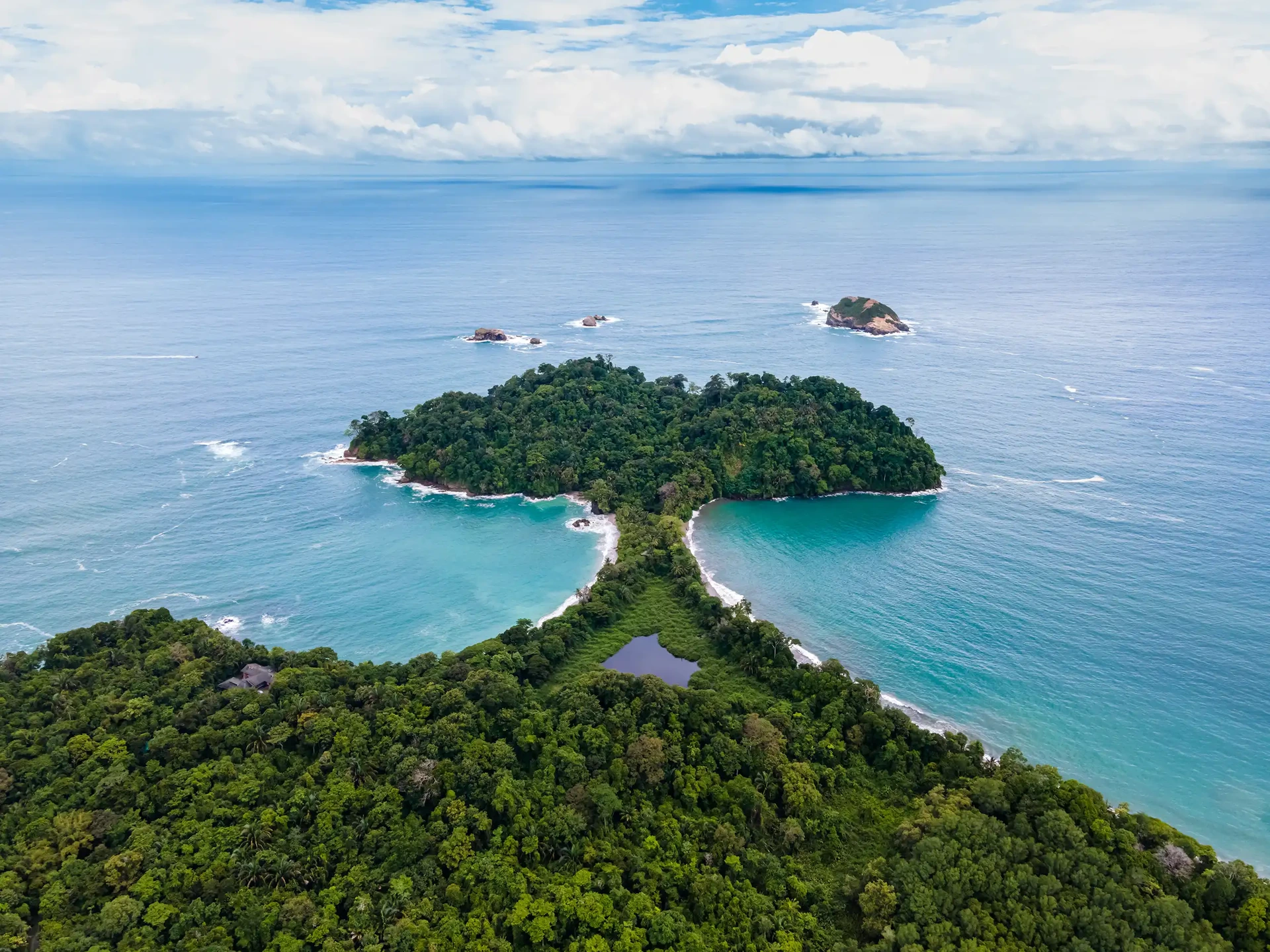
Punta Catedral is a 1.4 kilometer loop over the headland that used to be an island, with three viewpoints out to the offshore rocks. It takes about an hour. The official page currently lists it as temporarily closed, so ask at the entrance. The Mirador trail on the far side is 1.3 kilometers with a lot of steps and a view of Punta Serrucho, a jagged point sitting on a fault line. The waterfall trail near the entrance is short and only has water in the rainy months.
What to bring and what is not allowed
Bring a reusable water bottle. There are refill fountains on the Perezoso boardwalk and on the beach trails. Wear closed shoes for the trails and carry sandals for the sand. Swimsuit under your clothes, a quick dry towel, reef safe sunscreen, and insect repellent. There are lockers at the entrance, plus restrooms, showers, and changing rooms inside.
The rules say no food or drink of any kind, under conditions the park administration sets, and single use plastic is turned away at the bag check. Bags do get opened. The reason is the animals: capuchins and raccoons have learned that daypacks contain lunch, and a fed monkey turns into a thief with a short life. There is a cafeteria inside with a designated eating area, open through the middle of the day.
Also on the banned list: umbrellas, balls, tents, hammocks, pets, alcohol, and smoking. Do not feed anything, do not leave a bag alone on the beach, and do not sit under the manzanillo tree on the sand, it is toxic and the sign means it.
Parking and the walk in
The park has no parking of its own. Private lots owned by locals sit about 150 meters from the entrance, around ten dollars for the day, and the paved one with signs and marked spaces is the easy choice. Pay cash and leave nothing visible in the car.
Here is the trap. Coming down the last hill toward the beach, men in a lot on the right will step into the road, wave, and tell you this is the park parking and that you cannot enter without their guide. It is not, and you can. You are still half a mile out. Shake your head and keep driving.
If you come by the public bus from Quepos, it ends at the roundabout by Playa Espadilla Norte, not at the gate. Walk the path marked Beach Trail past the big parking lot, over a small footbridge, about ten minutes to the entrance.
How to avoid the crowd
Take the first entry of the morning. It is cooler, the monkeys and sloths are moving, and by 11 a.m. the canopy goes quiet and the trail turns into a hot walk. Most tour groups stay on the main trail and Playa Manuel Antonio, so once you have swum there, move over to Espadilla Sur or Gemelas for the rest of your time.
On the calendar, September and October have the lowest visitation of the year, and the park itself says so. Christmas to New Year and Easter week are the opposite. We cover the month by month picture in our guide to the best time to visit Manuel Antonio, and if you are bringing small children, read Manuel Antonio with kids first, because the park with a toddler is a different plan.
There are more guides like this one on our guides page.