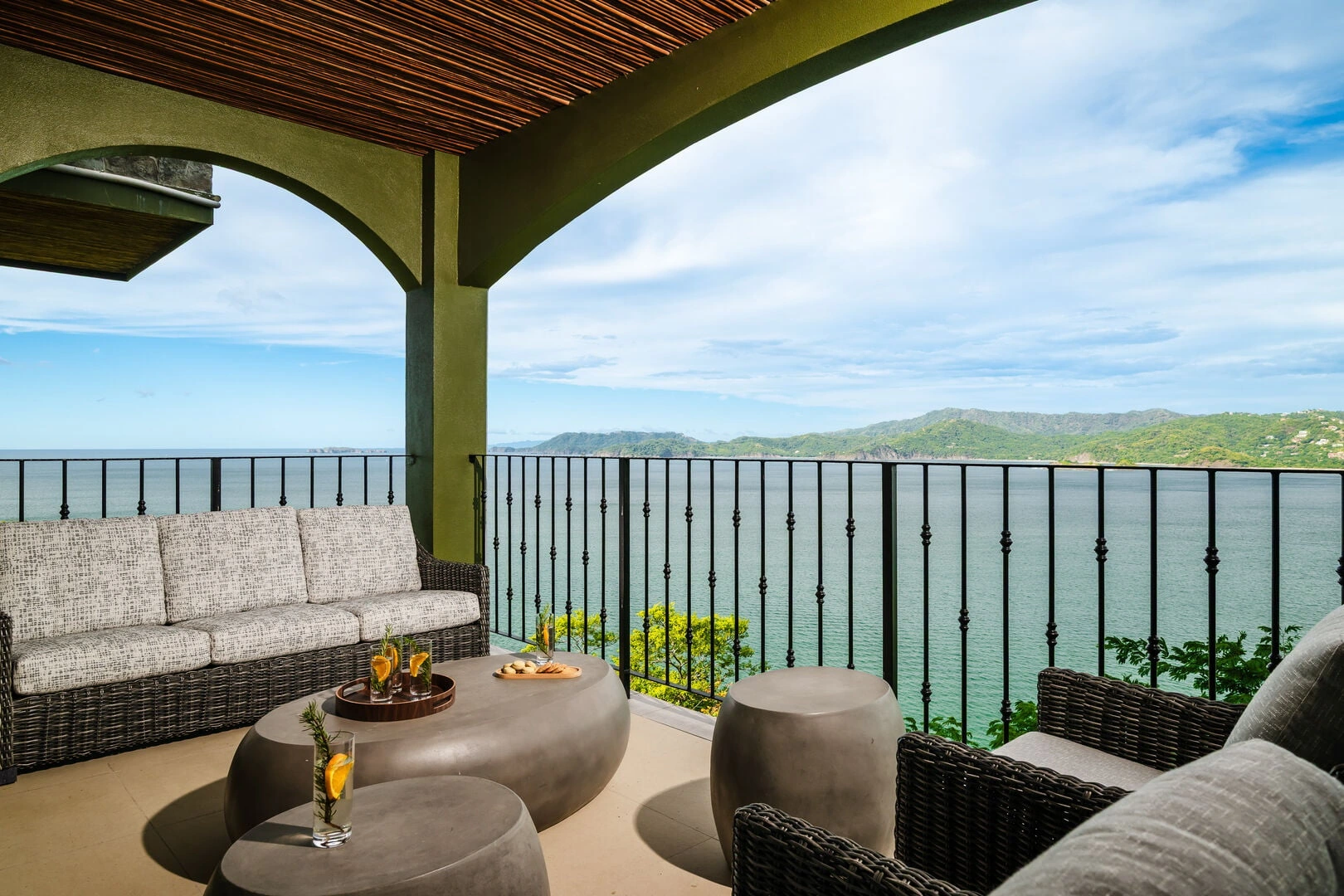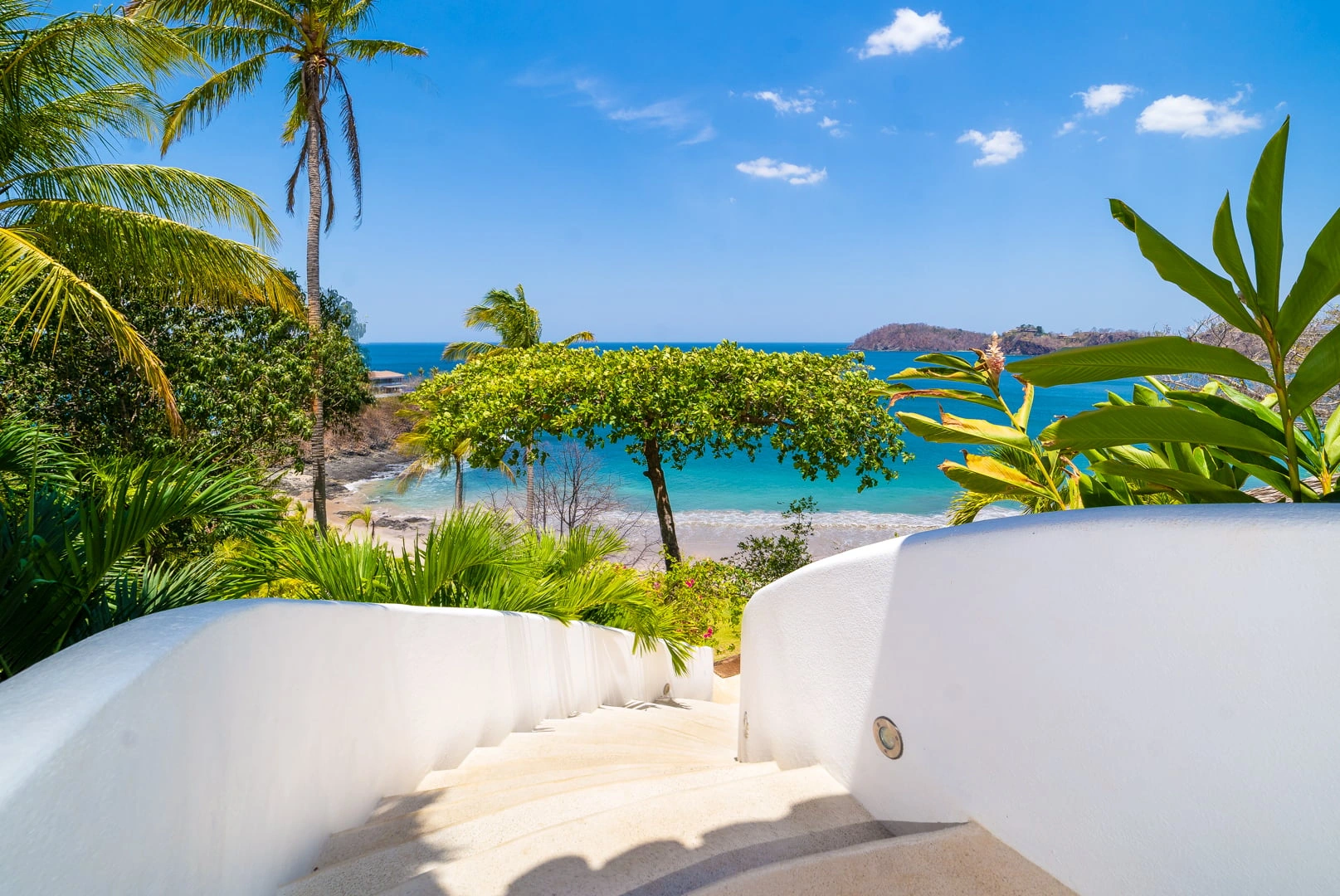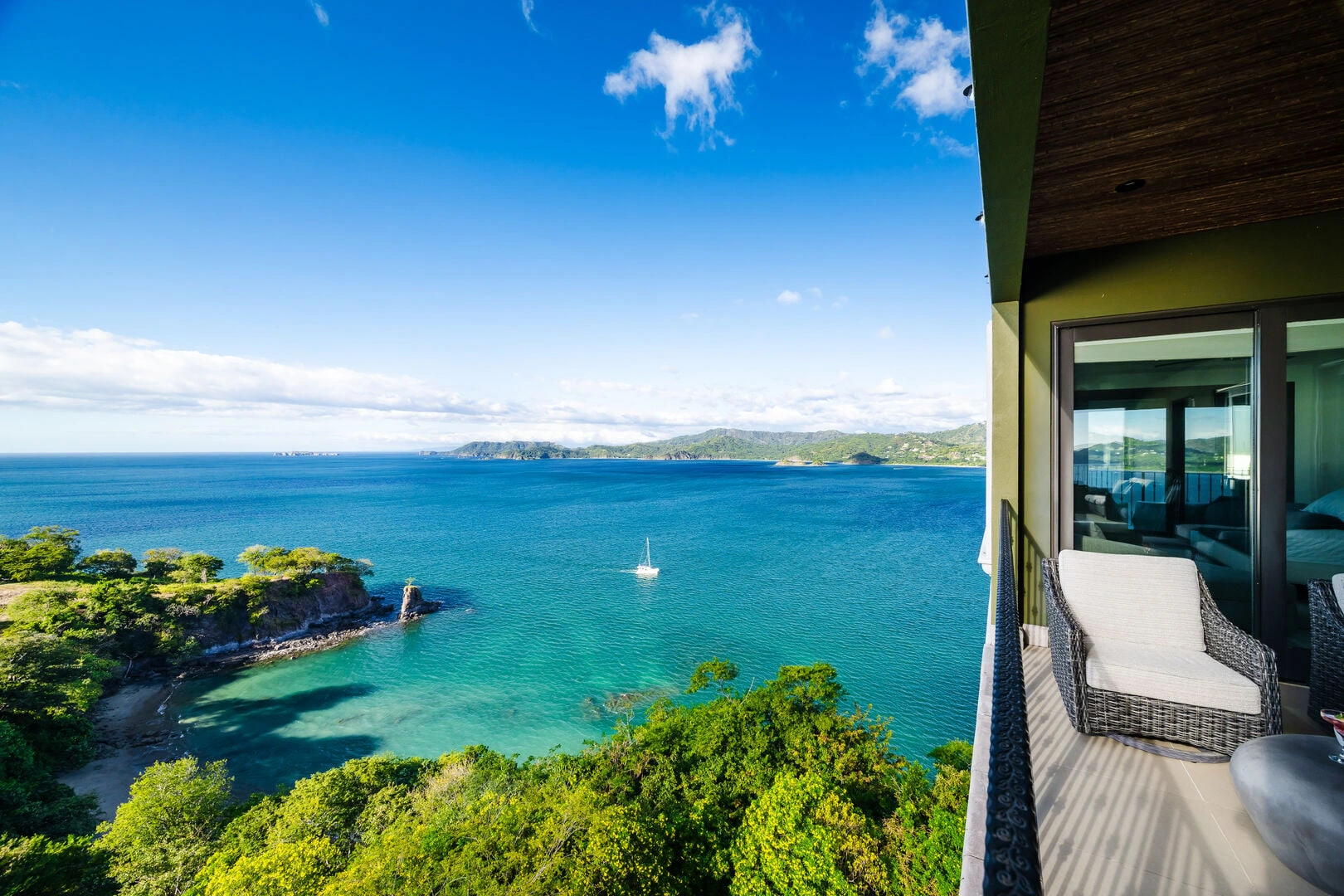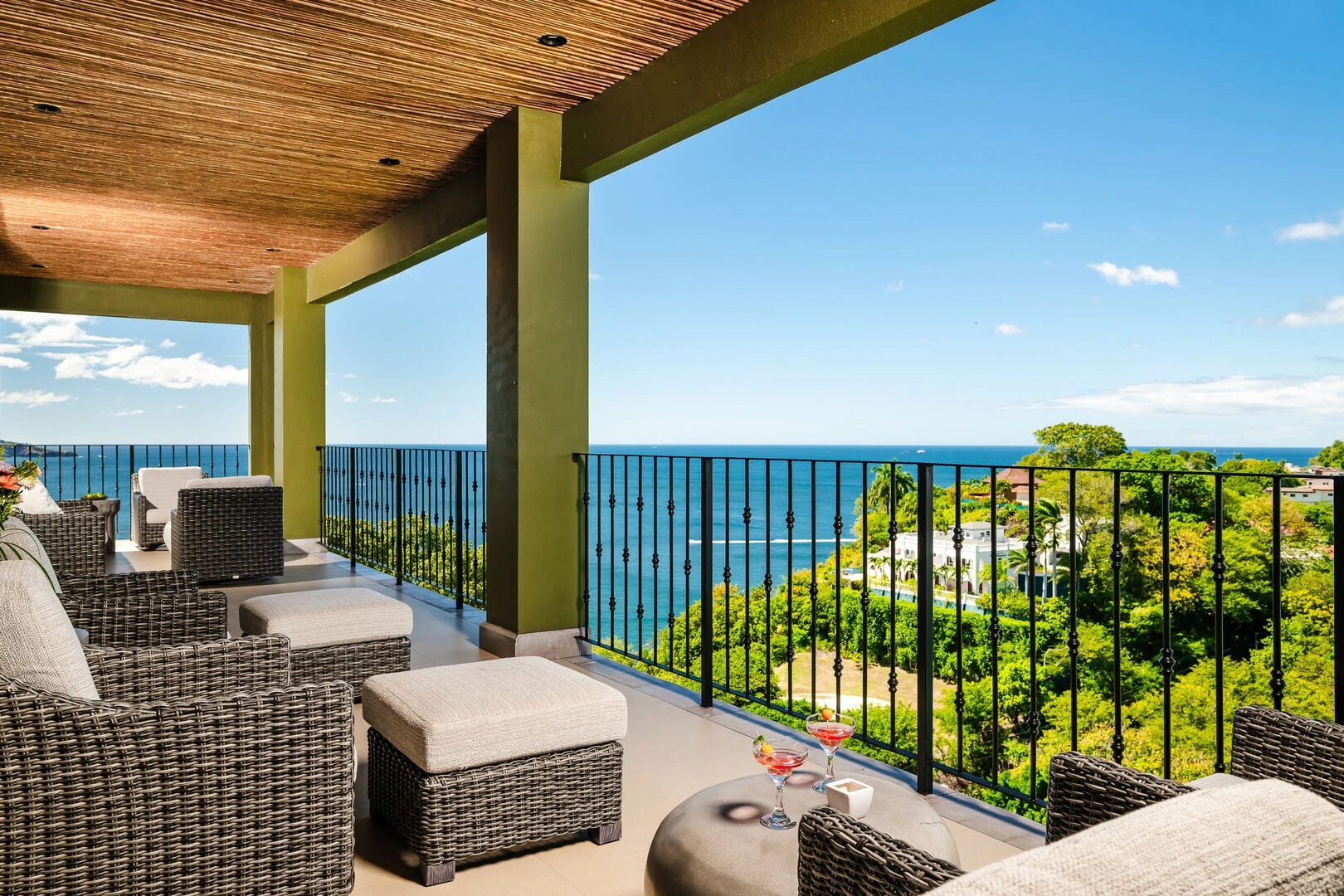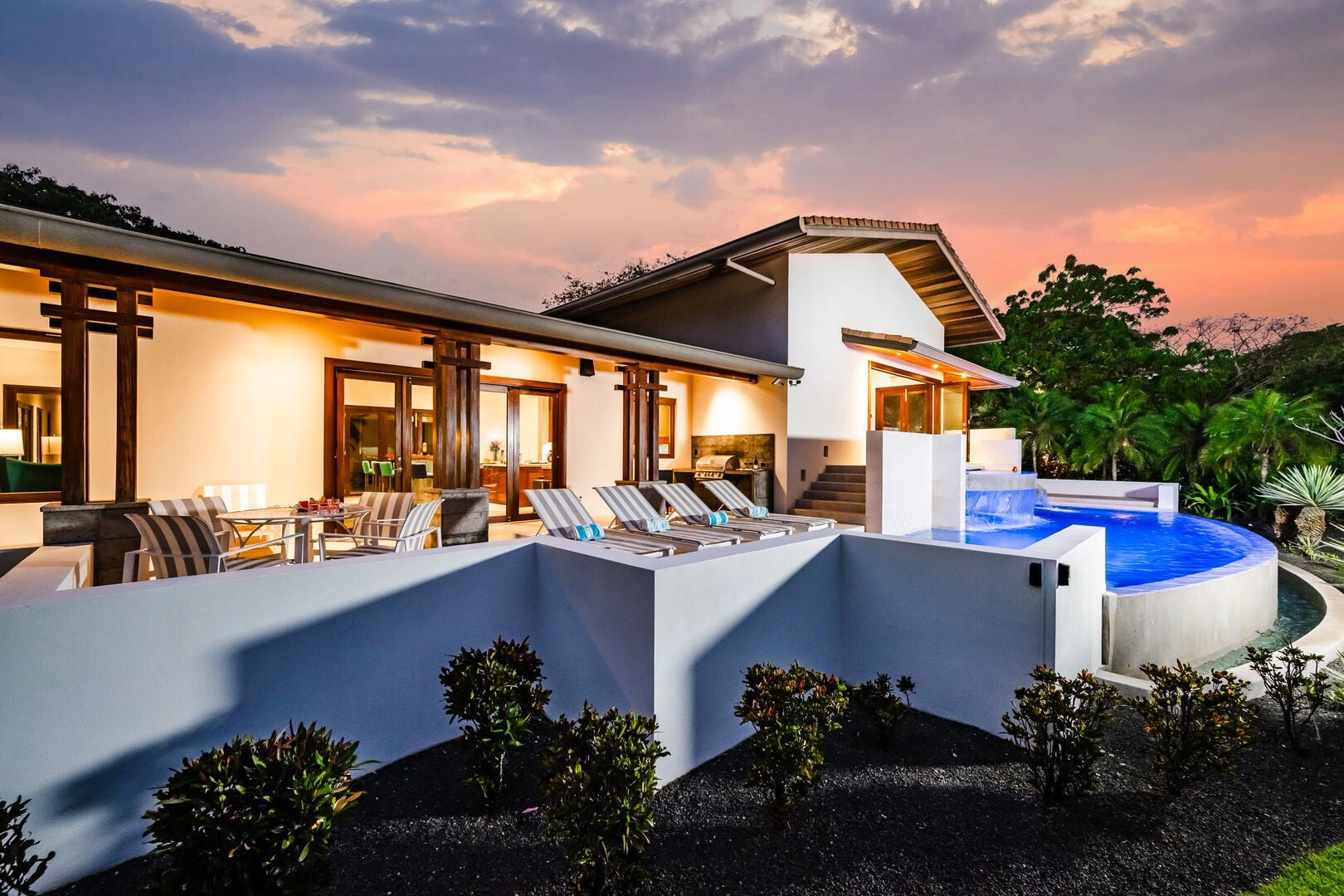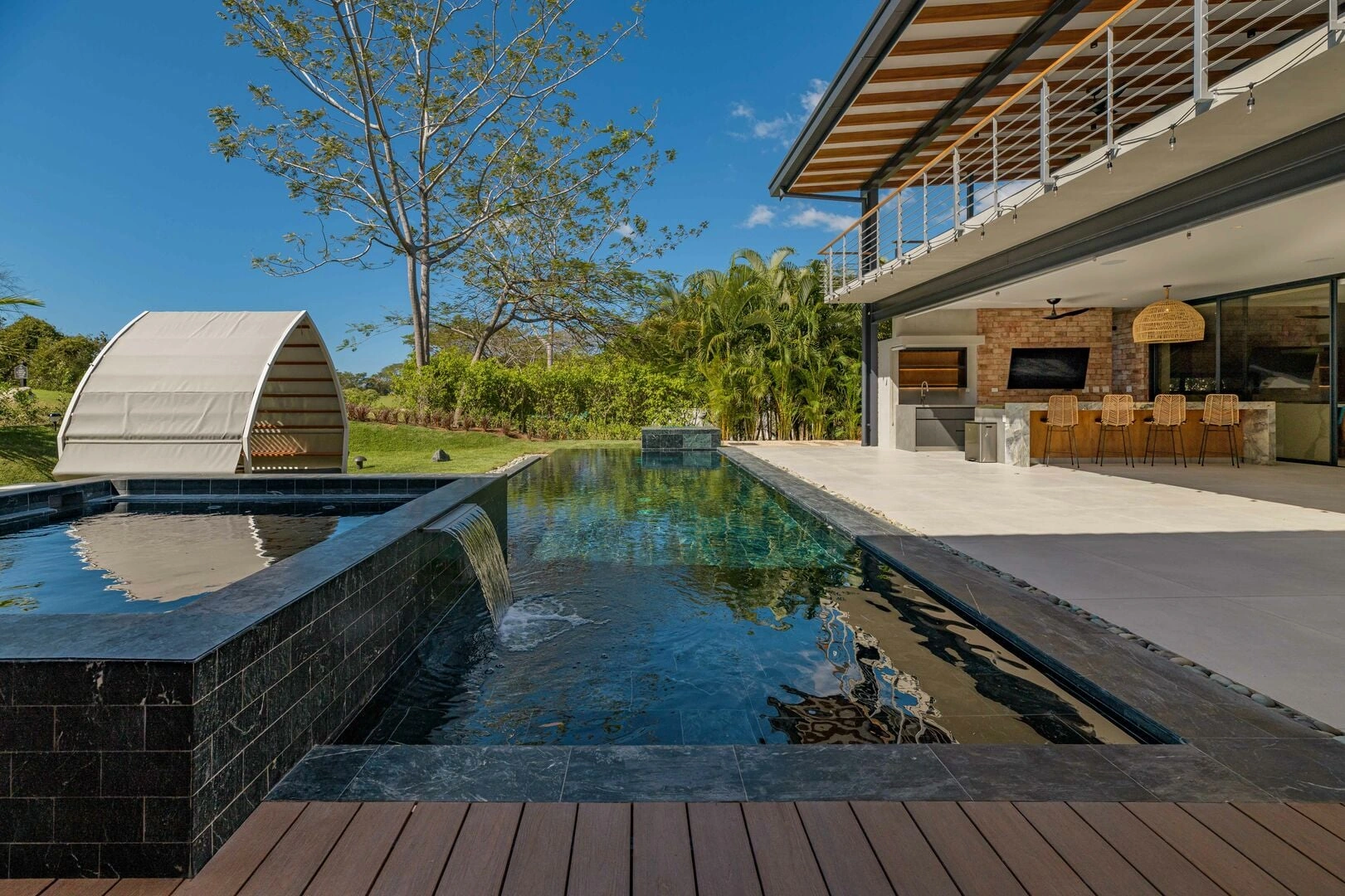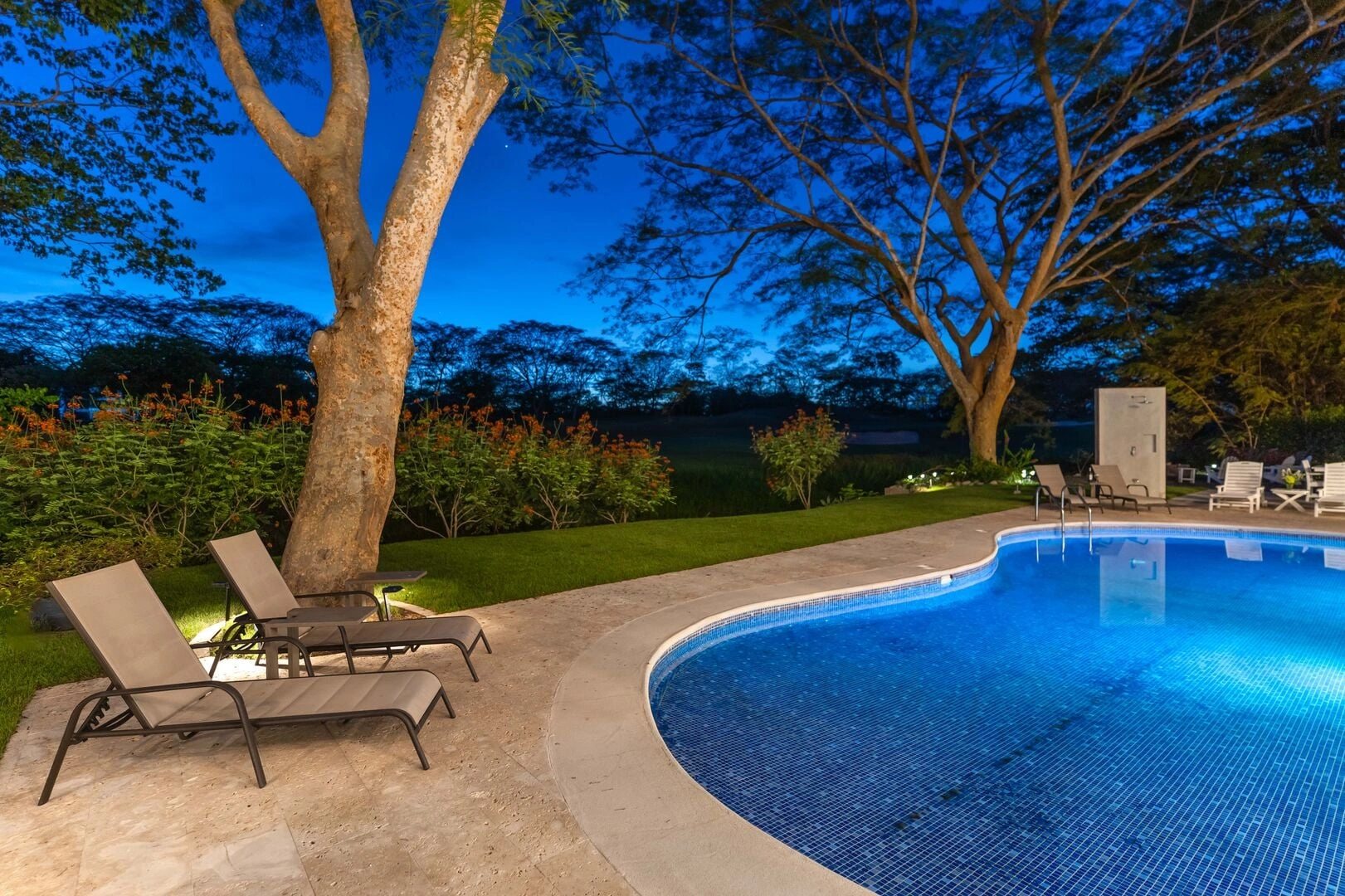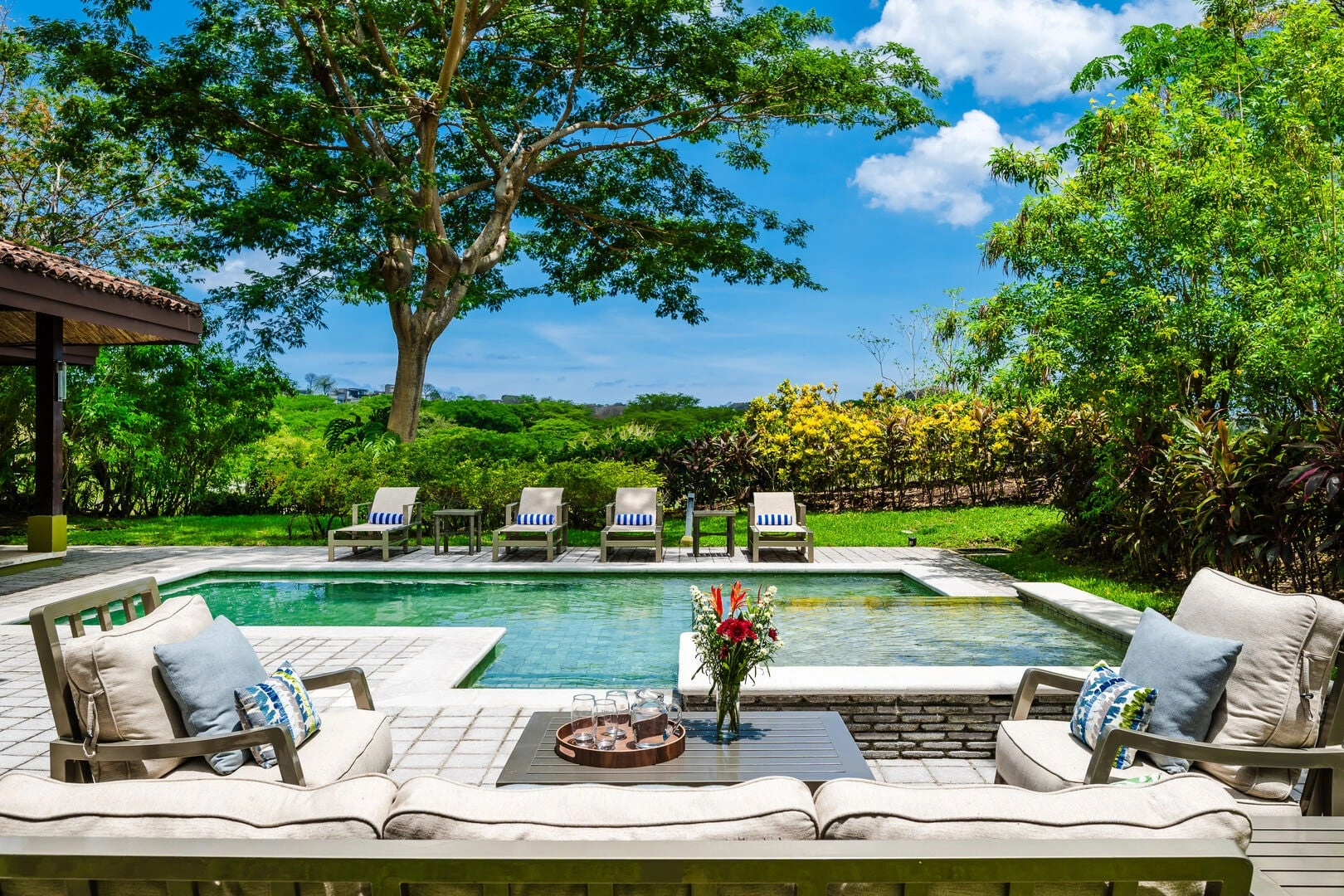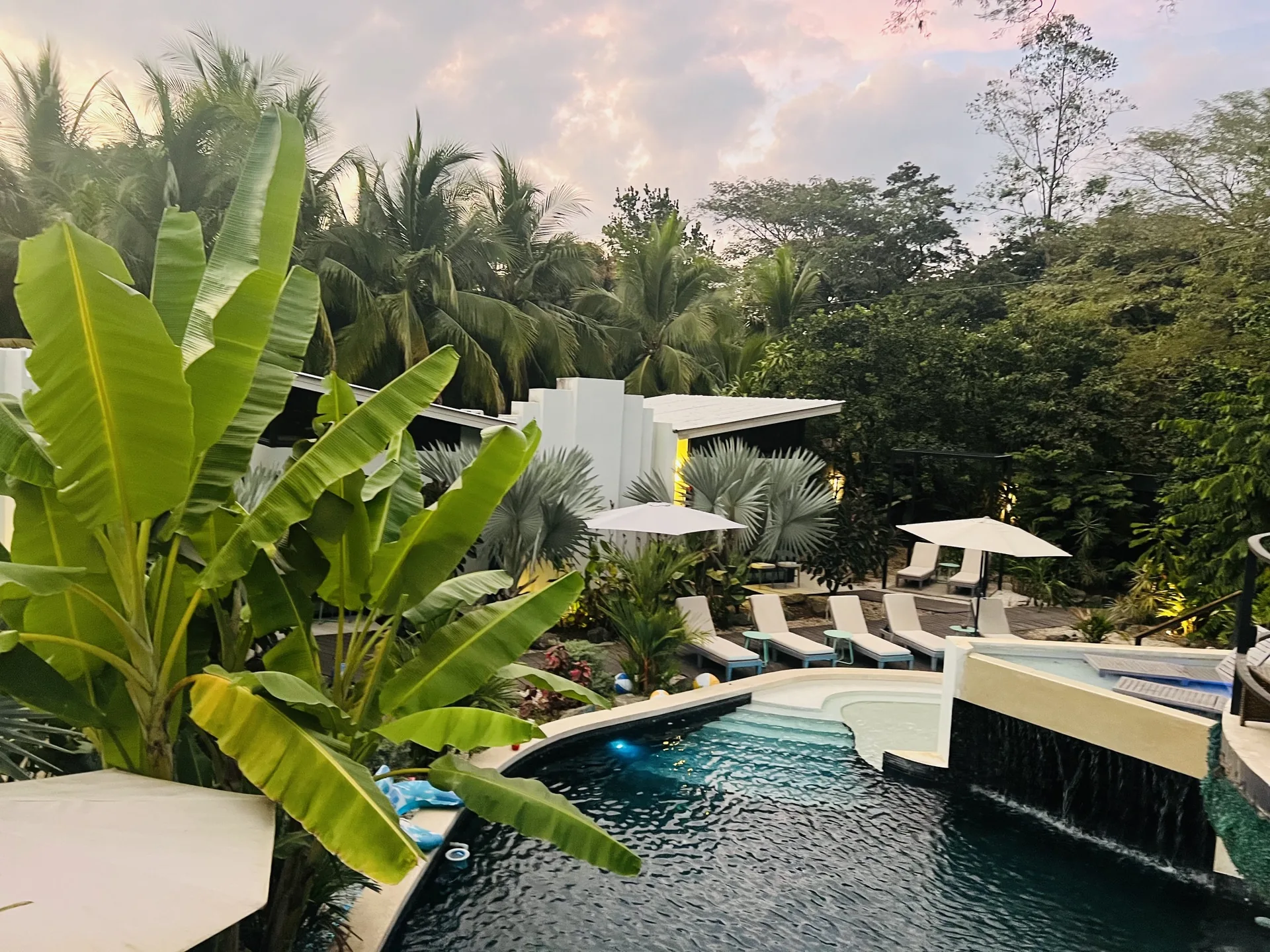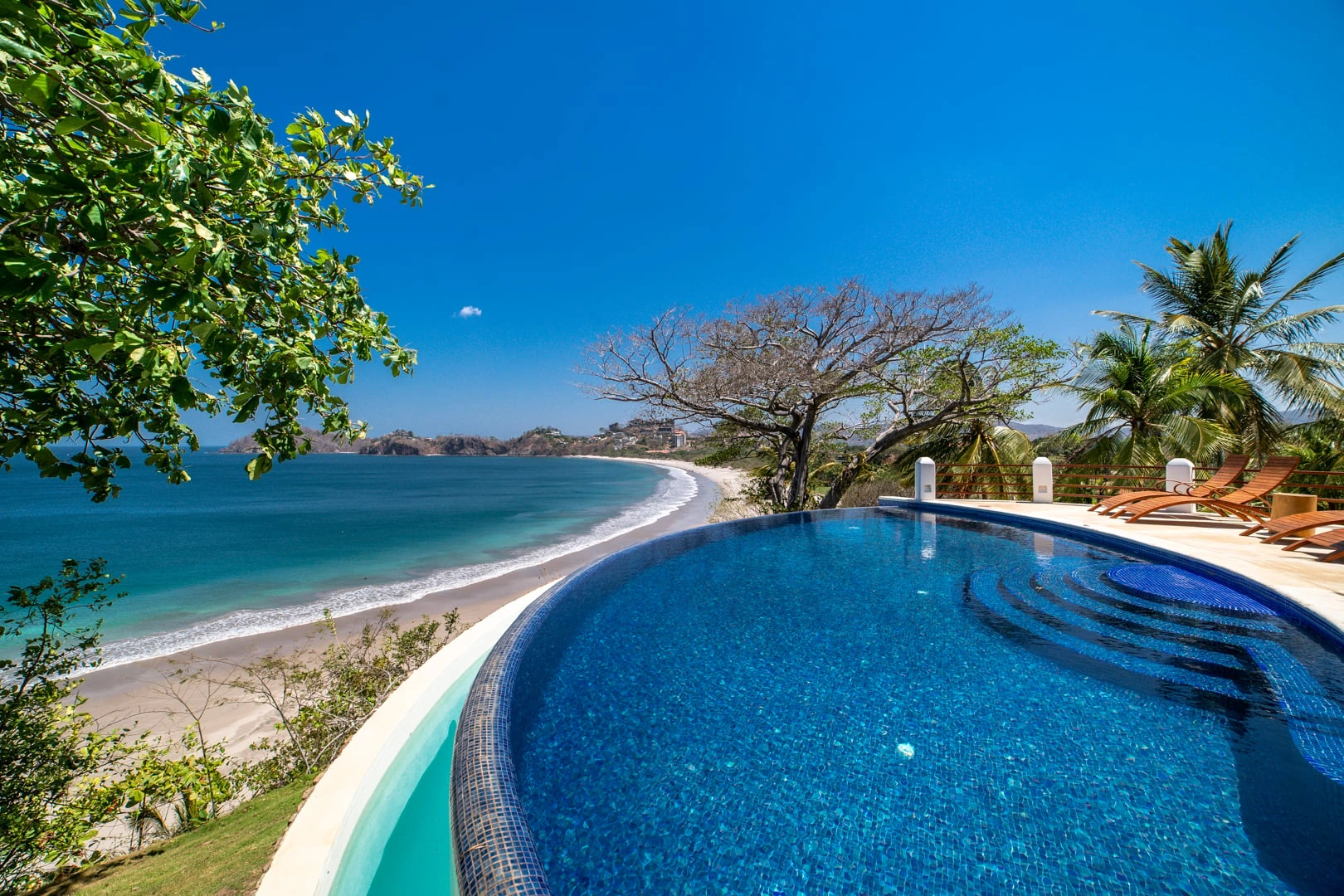
Playa Flamingo is a long curve of pale sand on the north Pacific coast of Guanacaste, about an hour from Liberia airport. A mangrove forest sits behind the middle of the beach, so nothing is built there. The condos, hotels, houses, shops, and restaurants climb the hills at either end, and Marina Flamingo is tucked behind the rocky point to the north.
There is no real town center, and that is the point. Flamingo runs upscale and hilly, most houses look out over the bay, and the evenings are quiet. It suits families and groups who want a calm beach base with a marina for boat days. Brasilito is 10 minutes south, Potrero five minutes north, and Tamarindo about half an hour away when you want a busier night out.
Who should skip it: anyone who wants to walk to a different restaurant or bar every night. Tamarindo is the walkable town on this coast; Flamingo is where you go to get away from it.
Fly into Liberia (LIR). From there it is about an hour to Flamingo on flat, paved roads, and closer to an hour and a half door to door depending on where your house sits. San José's airport is about five hours away by road, so it only makes sense if you are combining Flamingo with another part of the country.
We arrange private transfers from Liberia airport for the whole group, car seats included. One note if you are driving yourself: the shorter dirt road north of Flamingo, Route 911, crosses rivers that flood in heavy rain. In the wet months, take the paved road through Huacas.
Golf carts are the local car. The beach, the marina, the grocery store, and most restaurants sit close together, so a lot of people rent a cart instead of a car. The rental companies say their carts are street legal and follow the same rules of the road. They stay inside a set service area (one company draws it from Reserva Conchal north to Playa Prieta), top out around 20 mph, and are never allowed on the sand.
One company lists a four-seat gas cart at about $60 a day or $350 a week with free delivery to Flamingo, Potrero, Brasilito, and Conchal, fuel extra, and a three-day minimum from December through April. Confirm on the company's site before you book. Carts are not four-wheel drive, which matters on Flamingo's hills: if your house sits high up a steep driveway, ask before you rent. Bring your driver's license and a copy of your passport.
Longer hops. For Tamarindo, day trips, and the airport, use a private transfer or a local taxi. Do not count on Uber here, especially from Liberia airport.
Playa Flamingo. Pale sand with a slight pink cast in some light, chair rentals, and usually small waves that can still hit hard. The middle of the beach stays undeveloped because of the mangrove behind it.
Playa Potrero. Five minutes north. A sheltered bay with darker sand, calm enough for kayaks and paddleboards, with a few casual restaurants and a brewery along the Surfside road.
Playa Penca and Playa Prieta. Two small beaches past Potrero. Penca has light sand and clear water; Prieta, reached by a steep dirt road or a trail from Penca, has shade and small waves that suit kids.
Pan de Azúcar. Light gray sand, few people, and the Catalina Islands out on the horizon.
Playa Danta and Las Catalinas. A calm cove with snorkeling at the rocks on both sides and a car-free town behind it. Busy with locals on weekends.
Brasilito. About 10 minutes south. A working village with a soccer field and plaza right off the beach and fishing boats pulled up on the sand.
Playa Conchal. Sand made of crushed shells, usually calm water, and snorkeling at the north end. Cars can no longer drive onto it, so walk 10 to 15 minutes south along the sand from Brasilito. The sand gets very hot by midday; bring water shoes.
Catamaran sails. Several boats leave from Marina Flamingo for a morning snorkel sail or an afternoon sail timed to sunset, with time to swim in a calmer cove. Because they board from the dock, you walk aboard instead of wading out through the surf, which matters with small kids or older guests. Shared seats run about $85 to $125 a person at the operators we track, and private boats are available for groups. Confirm prices on the operator's site. From December through April, book the afternoon sail for the sunset.
Catalina Islands snorkeling and diving. Dive shops in Flamingo and Potrero run boats out to the Catalina Islands. Manta rays turn up roughly from late in the year into spring, though the operators disagree on the exact months. Experienced divers can go farther out to the Bat Islands for bull sharks, roughly May to October, on advanced dives only.
Sportfishing. Marina Flamingo is the only true charter marina in Guanacaste, and its peak season runs opposite the central Pacific: sailfish are best from May through August. Billfish are catch and release, and every angler needs a fishing license. See the operators we track on our Guanacaste fishing page, or read where to fish in Costa Rica, month by month.
Surf lessons. Flamingo is not a surf beach. Lessons happen in Tamarindo or Playa Grande, about half an hour south, and several schools arrange the ride from the Flamingo area.
Day trips inland. Rincón de la Vieja, with its volcano ranches, hot springs, and mud baths, is about two hours away, and the national park closes on Mondays (confirm on the official site). Palo Verde's river and wetland birds are about an hour and 15 minutes. Río Celeste, the sky-blue river in Tenorio Volcano National Park, is about two and a half hours each way, a long day best started early, since the park's last entry is 2 pm. Arenal is close to four hours each way, so it is a separate stop, not a day trip.
Groceries. Flamingo has small grocery stores, the biggest of them Super Massai, plus pharmacies and two bank ATMs. For a full shop there are bigger supermarkets a short drive inland in Huacas, and the big stores in Liberia sit on the airport road, so many guests stock up on the way in. Or we can have the house stocked before you arrive through our concierge service.
Eating out. Marina Flamingo has several restaurants, there are tables on the sand at the south end of the beach, and Potrero's Surfside road has a brewery with food trucks, wood-fired pizza, and pub nights. Brasilito keeps the local sodas around its plaza. Restaurants here change hands often and several close one day a week, so we check what is open before we recommend anywhere. Restaurant bills in Costa Rica already include a 10% service charge by law.
Medical. There is an urgent care clinic at Marina Flamingo, and the private hospital in Huacas runs 24-hour urgent care. In an emergency, call 911.
Manchineel trees. Some of the shrubby shade trees on the upper part of Playa Flamingo are manchineel. Sap from the leaves, bark, or small apple-like fruit causes a rash and blisters. Do not touch them and do not eat the fruit.
Rip currents. Most beaches here have no lifeguard. Swim near other people, stay out of river mouths, and if a current pulls you out, float and swim parallel to the beach. Potrero, Penca, Danta, and Conchal are the calmer choices for kids.
Tsunami routes. Flamingo and Brasilito are not recognized as Tsunami Ready communities, so look up the evacuation route from your house on the first day. Our Costa Rica safety guide covers the warning signs and the official maps.
Petty theft. The usual problem is a bag left on the sand or something visible in a car or cart. Take only what you need to the beach and leave nothing in the vehicle.
Guanacaste is the dry side of the country. December through March is the driest stretch, April is the transition, the rains arrive in late May, a short drier spell often comes in July or August, and September and October are the wettest months.
The dry months come with the Papagayo wind: calm mornings, windy afternoons, and cooler, choppier water that lowers snorkel visibility. Plan boats for the morning. The green season trades afternoon storms for calmer seas, the best sailfishing of the year, and quieter beaches. Humpback whales pass this coast from December to March and again from July to mid-November.
Four houses on the Flamingo hills and beach, and five more a few minutes away at Playa Conchal and Playa Potrero.
About an hour on flat, paved roads, and closer to an hour and a half door to door depending on where your house sits. Fly into Liberia (LIR) rather than San José, which is about five hours away by road.
Not for the beach, the marina, and dinner. Many people get around Flamingo and Potrero by golf cart, which the local rental companies say is street legal inside their service area. Carts top out around 20 mph and are never allowed on the sand, so book a private transfer or a car for Tamarindo, day trips, and the airport.
Usually. The waves are generally small but can be powerful, and like most beaches in Costa Rica there is no lifeguard, so swim near other people. For the calmest water with kids, Playa Potrero, Playa Danta, and Playa Conchal are all close by.
Not really. Flamingo and Potrero are swimming beaches, not surf breaks. Lessons happen in Tamarindo or Playa Grande, about half an hour south, and several surf schools arrange transport from the Flamingo area.
December through March is the driest stretch, with April as the transition. The same months bring the Papagayo wind, so boat days and snorkeling go best in the morning. May through August brings afternoon rain, calmer seas, and the best sailfishing of the year, and September and October are the wettest months.
A modern marina at the north end of the beach, behind the rocky point. Catamarans and fishing boats board from its docks, so you walk aboard instead of wading out to a tender, and it has restaurants, shops, a gym, and an urgent care clinic.
Tell us your dates and your group, and we will match you with the right house, the sunset sail, and the ride from Liberia.
Talk to a conciergeStill choosing a coast? Read where to stay in Costa Rica, region by region.

We count visits without cookies, so nothing follows you home from here. Say yes to all and we also get to see which pages actually help people plan a trip. That is the whole ask. How we handle data.